Why do gingers convert to radical Islam? (ATTN: Som Pong)

Why do gingers convert to radical Islam? (ATTN: Som Pong)
Bah, as long as the kids take care of their old parents it's aight.
-
Vutulaki-san
Turanian Trashtalker wrote:L Vutulaki wrote:Turanian Trashtalker wrote:I will admit that Australia, New Zealand offers a superior standard of living compared to all of Asia and most of Europe.
But a lot of that is accidental... A huge chunk of Australia's economy comes from resource extraction, and you can thank Asia for a lot of the industry demand.
Korea doesn't own jack shit in terms of resources and the only way they can stay afloat is by undercutting their competition. Sometimes through shady means.
Industry[edit]
Mining[edit]
Main articles: Coal companies of Australia, Energy in Australia and Mining in Australia
Australian energy resources and major export ports map
Coal is mined primarily in Queensland, New South Wales and Victoria. 54% of the coal mined in Australia is exported, mostly to East Asia. In 2000/01, 258.5 million tonnes of coal was mined, and 193.6 million tonnes exported. Coal provides about 85% of Australia's electricity production.[104] In fiscal year 2008/09, 487 million tonnes of coal was mined, and 261 million tonnes exported.[105] Australia is the world's leading coal exporter.[106]
Australia's Argyle mine is the second largest diamond mine in the world estimated to produce 12.6 million carats in 2014, worth over $500 million.[citation needed] Argyle is known for producing some of the world's most valuable pink and red diamonds.
Manufacturing[edit]
Main article: Manufacturing in Australia
The manufacturing industry in Australia has declined from 30% of GDP in the 1960s to 12% of GDP in 2007.[107]
Agriculture[edit]
Main articles: Agriculture in Australia and Australian wine
Agriculture contributes 3% of Australia's GDP at the farm gate and when value-added processing beyond the farm is included this figure rises to 12%.[27] 60% of farm products are exported. Irrigation is an important and widespread practice for a country where many parts receive low rainfall. Agriculture, Forestry and Fishing was the second strongest industry from 2013-2015, with the number of employees growing from 295,495 in February 2013 to 325,321 in February 2015.[108]
Services[edit]
IT related jobs (such as computer system design and engineering) are defined as Professional, Scientific and Technical Services by the Department of Education, Employment and Workplace Relations of Australia. IT job creation occurs mostly in the state capital cities of Australia.[109]
Finance[edit]
Australia's four 'Big Banks' are among the 'World's 50 Safest Banks' as of April 2012.[110] The four largest banks in Australia are also known as the "Big Four".
Between 1991 and 2013, 36,720 mergers and acquisitions with a total known value of US$2,040 billion with the involvement of Australian firms have been announced.[111] In the year 2013, 1,515 transactions valued at US$78 billion had been announced which was a decrease in terms of numbers (−18%) and value (−11%) compared to 2012. The largest takeover or merger transaction involving Australian companies was the 2007 takeover of the Coles Group by Wesfarmers, totalling A$22 billion.[112]
Tourism[edit]
Monthly short-term arrivals in Australia since 1991
Main article: Tourism in Australia
In the financial year 2010–11, the tourism industry represented 2.5% of Australia's GDP, at a value of about $35 billion to the national economy – equivalent to $94.8 million a day to the Australian economy.[113] Domestic tourism is a significant part of the tourism industry, and was responsible for 73% of the total direct tourism GDP.[113] The 2010–11 financial year saw a record number of overseas arrivals in the financial year, with 5.9 million short-term visitor arrivals to Australia (588 extra visitors a day).[113] Tourism employed 513,700 people in Australia in 2010–11, of which 43.7% were part-time. Tourism also contributed 8.0% of Australia's total export earnings in 2010–11.[113]
Media[edit]
Main articles: Media of Australia and Telecommunications in Australia
In 2011–12, Australia was ranked 30th out of 179 countries in accordance to press freedom. Media is a strong industry in Australia, with Fairfax Media and News Corporation representing two of the country's largest media companies.
Education[edit]
Main articles: Education in Australia and Tertiary education in Australia
School attendance is compulsory in Australia, from the age of 5 up until approximately 16 (although it varies between each state and territory).[114] Australia also has an adult literacy rate that was estimated to be 99% in 2003.[115]
In 2004, the average educational acquirement of the adult population in OECD countries was 11.9 years. This is based on the duration of formal educational programmes. Australia ranked relatively highly in the study, with the population recording slightly over 12 years in education, ranking similarly to many European countries such as Sweden, Ireland and Poland. Australia was, however, outperformed by Canada, Germany and the United States—which all measured close to 14 years in education.[116]
In the Programme for International Student Assessment, Australia regularly scores among the top five of thirty major developed countries (member countries of the Organisation for Economic Co-operation and Development). Catholic education accounts for the largest non-government sector.
University attendance in Australia is expensive, particularly in comparison to other developed nations such as the New Zealand, Canada, France and the United Kingdom.[117]
every single developed country has that shit. don't even talk to me about industry. korea kicks ass at manufacturing.
the question is what propels australia to the top above most of europe and even the united states? it's the same reason why norway is much wealthier than its scandinavian neighbors.
it's not your bullshit "institutions", otherwise england would be a better place to live than australia.
....
You realise our resource boom is a fairly recent phenomenon right? Weve been a leading economy for 100 years plus, resource boom only started during our lifetimes.
Accountable transparent government
Good education system, yeah we dont have Ivy league level schools but we get the basics right much better than the US. We are number 2 on the HDI index and we would be first if they factored in our age.
Korea/China/Japan manufacture low end things like vacuum cleaners, LCD sets, Iphone cover etc
We develop and manufacture things like medical instruments, agricultural tech, high end machinery that requires skill to manufacture etc etc
-
Vutulaki-san
Som-Pong wrote:Bah, as long as the kids take care of their old parents it's aight.
They dont hence the problem, go to Seoul and youll see elderly hunch backed aju ma's cleaning the street pulling carts around like in Ho Chi Minh city I shit you not, TT will be around soon to confirm
That's fucked up. Only really poor old person I know is an old widow in my hood. Her son is retarded :(
She collects and recycles cans and bottles, really sweet old lady.
She collects and recycles cans and bottles, really sweet old lady.
-
Vutulaki-san
Turanian Trashtalker wrote:L Vutulaki wrote:Turanian Trashtalker wrote:I will admit that Australia, New Zealand offers a superior standard of living compared to all of Asia and most of Europe.
But a lot of that is accidental... A huge chunk of Australia's economy comes from resource extraction, and you can thank Asia for a lot of the industry demand.
Korea doesn't own jack shit in terms of resources and the only way they can stay afloat is by undercutting their competition. Sometimes through shady means.
Industry[edit]
Mining[edit]
Main articles: Coal companies of Australia, Energy in Australia and Mining in Australia
Australian energy resources and major export ports map
Coal is mined primarily in Queensland, New South Wales and Victoria. 54% of the coal mined in Australia is exported, mostly to East Asia. In 2000/01, 258.5 million tonnes of coal was mined, and 193.6 million tonnes exported. Coal provides about 85% of Australia's electricity production.[104] In fiscal year 2008/09, 487 million tonnes of coal was mined, and 261 million tonnes exported.[105] Australia is the world's leading coal exporter.[106]
Australia's Argyle mine is the second largest diamond mine in the world estimated to produce 12.6 million carats in 2014, worth over $500 million.[citation needed] Argyle is known for producing some of the world's most valuable pink and red diamonds.
Manufacturing[edit]
Main article: Manufacturing in Australia
The manufacturing industry in Australia has declined from 30% of GDP in the 1960s to 12% of GDP in 2007.[107]
Agriculture[edit]
Main articles: Agriculture in Australia and Australian wine
Agriculture contributes 3% of Australia's GDP at the farm gate and when value-added processing beyond the farm is included this figure rises to 12%.[27] 60% of farm products are exported. Irrigation is an important and widespread practice for a country where many parts receive low rainfall. Agriculture, Forestry and Fishing was the second strongest industry from 2013-2015, with the number of employees growing from 295,495 in February 2013 to 325,321 in February 2015.[108]
Services[edit]
IT related jobs (such as computer system design and engineering) are defined as Professional, Scientific and Technical Services by the Department of Education, Employment and Workplace Relations of Australia. IT job creation occurs mostly in the state capital cities of Australia.[109]
Finance[edit]
Australia's four 'Big Banks' are among the 'World's 50 Safest Banks' as of April 2012.[110] The four largest banks in Australia are also known as the "Big Four".
Between 1991 and 2013, 36,720 mergers and acquisitions with a total known value of US$2,040 billion with the involvement of Australian firms have been announced.[111] In the year 2013, 1,515 transactions valued at US$78 billion had been announced which was a decrease in terms of numbers (−18%) and value (−11%) compared to 2012. The largest takeover or merger transaction involving Australian companies was the 2007 takeover of the Coles Group by Wesfarmers, totalling A$22 billion.[112]
Tourism[edit]
Monthly short-term arrivals in Australia since 1991
Main article: Tourism in Australia
In the financial year 2010–11, the tourism industry represented 2.5% of Australia's GDP, at a value of about $35 billion to the national economy – equivalent to $94.8 million a day to the Australian economy.[113] Domestic tourism is a significant part of the tourism industry, and was responsible for 73% of the total direct tourism GDP.[113] The 2010–11 financial year saw a record number of overseas arrivals in the financial year, with 5.9 million short-term visitor arrivals to Australia (588 extra visitors a day).[113] Tourism employed 513,700 people in Australia in 2010–11, of which 43.7% were part-time. Tourism also contributed 8.0% of Australia's total export earnings in 2010–11.[113]
Media[edit]
Main articles: Media of Australia and Telecommunications in Australia
In 2011–12, Australia was ranked 30th out of 179 countries in accordance to press freedom. Media is a strong industry in Australia, with Fairfax Media and News Corporation representing two of the country's largest media companies.
Education[edit]
Main articles: Education in Australia and Tertiary education in Australia
School attendance is compulsory in Australia, from the age of 5 up until approximately 16 (although it varies between each state and territory).[114] Australia also has an adult literacy rate that was estimated to be 99% in 2003.[115]
In 2004, the average educational acquirement of the adult population in OECD countries was 11.9 years. This is based on the duration of formal educational programmes. Australia ranked relatively highly in the study, with the population recording slightly over 12 years in education, ranking similarly to many European countries such as Sweden, Ireland and Poland. Australia was, however, outperformed by Canada, Germany and the United States—which all measured close to 14 years in education.[116]
In the Programme for International Student Assessment, Australia regularly scores among the top five of thirty major developed countries (member countries of the Organisation for Economic Co-operation and Development). Catholic education accounts for the largest non-government sector.
University attendance in Australia is expensive, particularly in comparison to other developed nations such as the New Zealand, Canada, France and the United Kingdom.[117]
every single developed country has that shit. don't even talk to me about industry. korea kicks ass at manufacturing.
the question is what propels australia to the top above most of europe and even the united states? it's the same reason why norway is much wealthier than its scandinavian neighbors.
it's not your bullshit "institutions", otherwise england would be a better place to live than australia.
....
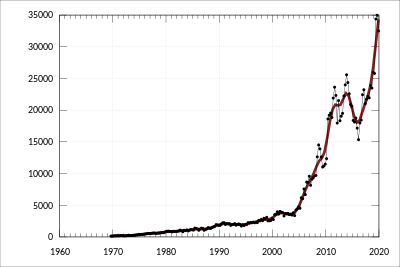
^^
Mining boom
Here you go and we have been top of the food chain for over a century
-
Turanian Trashtalker
- Posts: 802
- Joined: Fri Jul 03, 2015 4:57 am
- Reputation: 286
i'm going to remind you that poverty is relative.
those elderly people grew up in a nation where 80% of people were illiterate and the life expectancy was 42. They don't think of themselves as "poor" in the year 2015. And yet they vote conservative every single year.
Sucks how they are killing themselves in droves, and I am ashamed of how responsible they are.
-
Turanian Trashtalker
- Posts: 802
- Joined: Fri Jul 03, 2015 4:57 am
- Reputation: 286
south korea cannot afford any sort of welfare state while remaining economically competitive.
those bloated welfare states in europe are totally unsustainable... they need crippling taxes to maintain all their benefits, the vast majority of which go to the elderly + 3rd world people.
Not only that, the cunts of Europe believe in feminism, which has totally destroyed the family unit... Young people aren't having kids, and they are being crushed by high taxes and high unemployment, which makes them even less likely to have kids. The tax base shrinks further and further, while the elderly population skyrockets. What to do now?
The french health care system runs a deficit nearly every SINGLE year. You want me to explain what happens when you run a deficit forever?
If I spent money like that for decades, no bank on earth would be stupid enough to grant me a loan, yet it is totally OK for the federal government of a G7 country to operate like that in the long term. They are trying to cover their asses with mass immigration, and the results are very pathetic.
you basically have two choices:
1) shitty welfare state, and low taxes (south korea... really sad)
2) high taxes (kills your economy, whatever leftists will have you believe) and high government spending on welfare. Usually, the government spending vastly outweighs the tax revenue, no matter who you elect into office. You will have legions of morons who demand mass immigration to try and sustain their spending habits.
I'm not sure why Sweden thinks hundreds of thousands of illiterate Muslims are going to help them sustain their welfare state, but OK.
Japan has a government debt to GDP ratio of 300% (LMAO) and they don't even have half the welfare system that Sweden does. At least they aren't trying to destroy their culture.
Singapore and Hong Kong also have sky high rates of elderly poverty, for much the same reasons as South Korea. There really is nothing you can do about this. The elderly tolerate it because they still remember living in wretched third world circumstances, and even poverty in Singapore is tolerable compared to the old days.
............
-
Turanian Trashtalker
- Posts: 802
- Joined: Fri Jul 03, 2015 4:57 am
- Reputation: 286
I run into 20 something koreans who are constantly asking "why can't we be more like Europe"? "why can't we spend more on welfare?"
Then I try to explain to them how Denmark has a 25% VAT on everything, and pay up to 70% of their gross in taxes every year... That's if you're middle class. If you want to purchase a car, prepare for 180% tax on the price of the vehicle. One third of their workforce is employed by the government. Their health care system and public transport is total shit.... Go to Seoul and Copenhagen and see the difference.
And Danish politicians are extremely honest.
Your country has nothing but thieves running for office. You can't trust them to rescue a bunch of kids on a sinking ferry boat, let alone manage a pension system.
You have no natural resources, either. Zero. Zip. Nada. You don't even have decent solar and wind energy reserves. Nature has cursed you, the only way your country can stay afloat is by working harder than everyone else.
Do you still want the welfare state? I ask them.
I always hear nothing but crickets.
-
Vutulaki-san
Turanian Trashtalker wrote:i'm going to remind you that poverty is relative.
those elderly people grew up in a nation where 80% of people were illiterate and the life expectancy was 42. They don't think of themselves as "poor" in the year 2015. And yet they vote conservative every single year.
Sucks how they are killing themselves in droves, and I am ashamed of how responsible they are.
Unfortunately thats incorrect
-
Turanian Trashtalker
- Posts: 802
- Joined: Fri Jul 03, 2015 4:57 am
- Reputation: 286
i watched that documentary long before you found it.
and?
and?
Who is online
Users browsing this forum: No registered users and 23 guests