(CNN)While the skyline of London surges upward on a tide of new and startling towers, its eternal rival in Paris has taken the opposite approach.
After the deeply unpopular Tour Montparnasse was built in 1973, skyscrapers were effectively prohibited by a 36-meter height limit for new buildings in the city.
The limit was designed to preserve Paris' unique aesthetic, forged by Baron Haussmann's 19th century renovation, which created its iconic boulevards, public gardens, and housing blocks ringed with balconies.
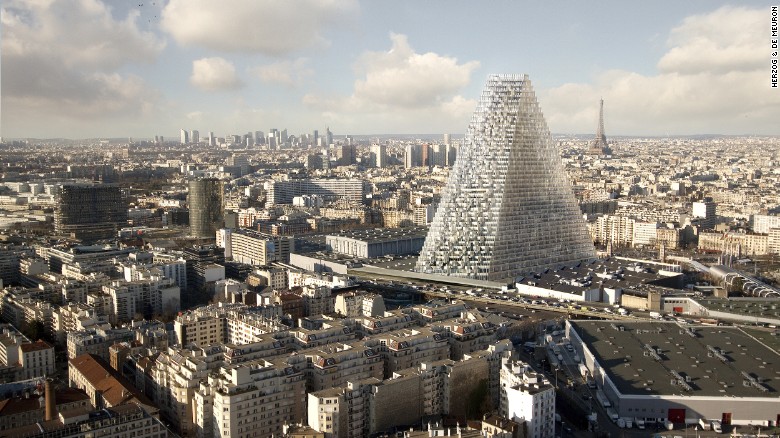
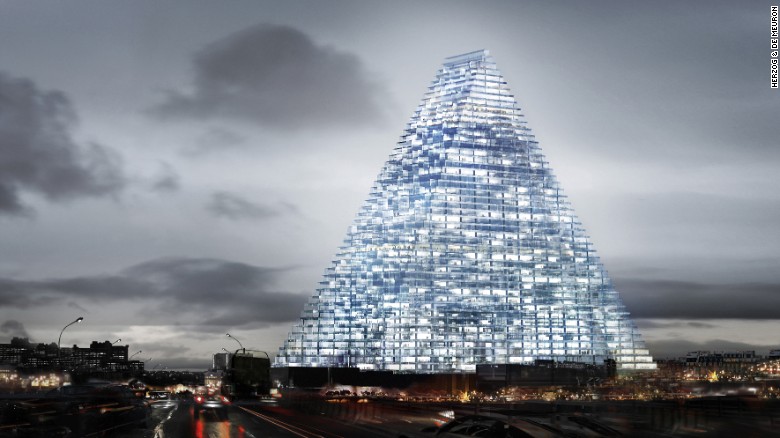
But in 2010 the height restrictions were lifted, and the serenity could now be shattered by a 180-meter glass triangle in the South-West of the city.
Called 'Tour Triangle,' the $555 million project from Swiss architects Herzog & de Meuron -- backed by Europe's largest property group Unibail Rodamco -- represents a radical and controversial departure from Parisian traditions.
Slim approval
Nine years after first being proposed, the Triangle narrowly passed a vote in Paris' City Council. It was the second such vote, after the plans were rejected in November, a decision later deemed 'invalid.'
The proposal was strongly supported by Socialist Party Mayor Anne Hidalgo, who stressed the economic opportunities of the Triangle, including 70,000 square meters of office space, luxury accommodation and leisure facilities.
"The abandonment of this project would be a disaster for the economy in Paris," Deputy Mayor Jean Louis Missika told Le Monde, claiming the project would create 3000 permanent jobs. "The Triangle Tower can be a signal to foreign investors, and international architects."
Herzog & de Meuron, responsible for Beijing's Bird's Nest stadium and London's Tate Modern, argue the building will fit with its environment.
"(We) take into account the impact of a high building on its environment," the architects said in a statement. "Its triangular shape reduces casting shadows on adjacent residential buildings. The environmental approach of the project is also perceptible in its simple, compact volume, which limits its ground impact."
http://edition.cnn.com/2015/07/28/archi ... oryGalLink