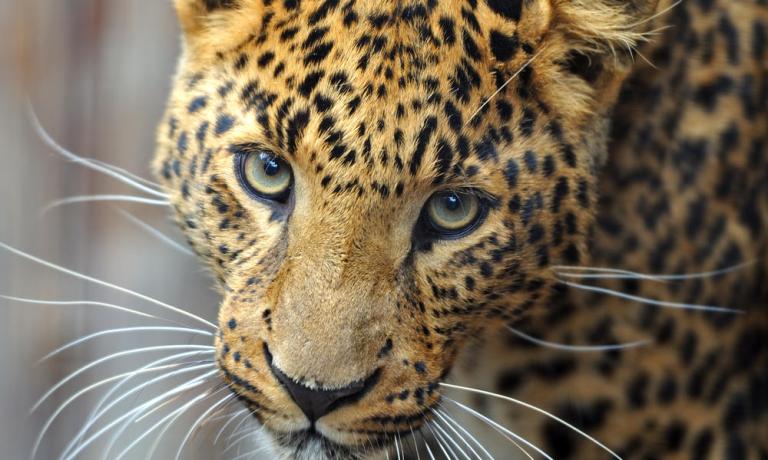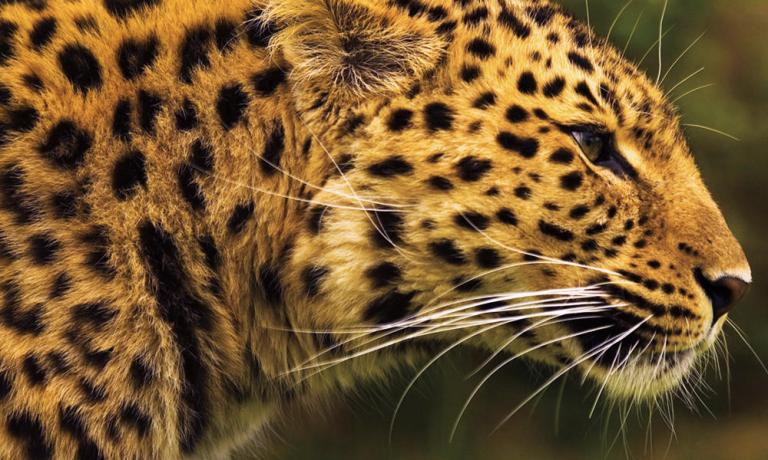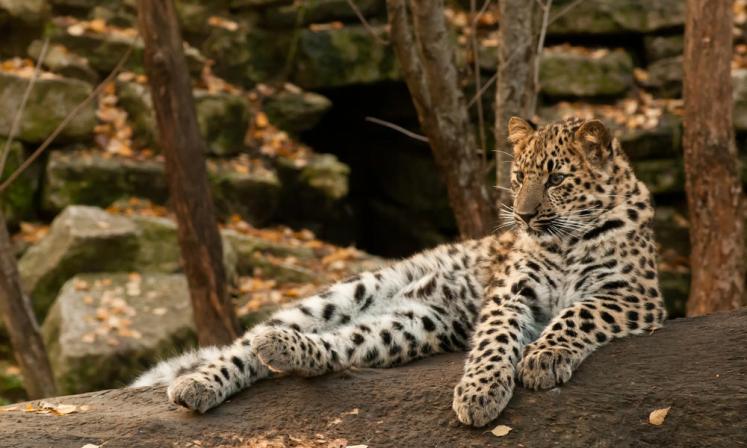

Leopards are big cats known for their golden, spotted bodies and graceful, yet ferocious hunting techniques. They are often thought of as an African animal, but leopards live all over the world. Though their reach is vast, their numbers are declining.
Size
Leopards are larger than a house cat, but leopards are the smallest members of the large cat category. They grow to only 3 to 6.2 feet (92 to 190 centimeters) long. Their tail adds another 25 to 39 inches (64 to 99 cm) to their length. Males and females vary in weight. Females typically weigh 46 to 132 pounds (21 to 60 kilograms) and males usually weigh around 80 to 165 lbs. (36 to 75 kg), according to the San Diego Zoo.
Habitat
The leopard is very adaptable and can live in many different places across the globe. Leopards are found in sub-Saharan Africa, the Arabian Peninsula, southwestern and eastern Turkey, in the Sinai/Judean Desert of Southwest Asia, the Himalayan foothills, India, Russia, China and the islands of Java and Sri Lanka, according to the International Union for Conservation of Nature (IUCN). These large cats can live in almost any type of habitat, including rainforests, deserts, woodlands, grassland savannas, forests, mountain habitats, coastal scrubs, shrub lands and swampy areas. In fact, leopards live in more places than any other large cat.
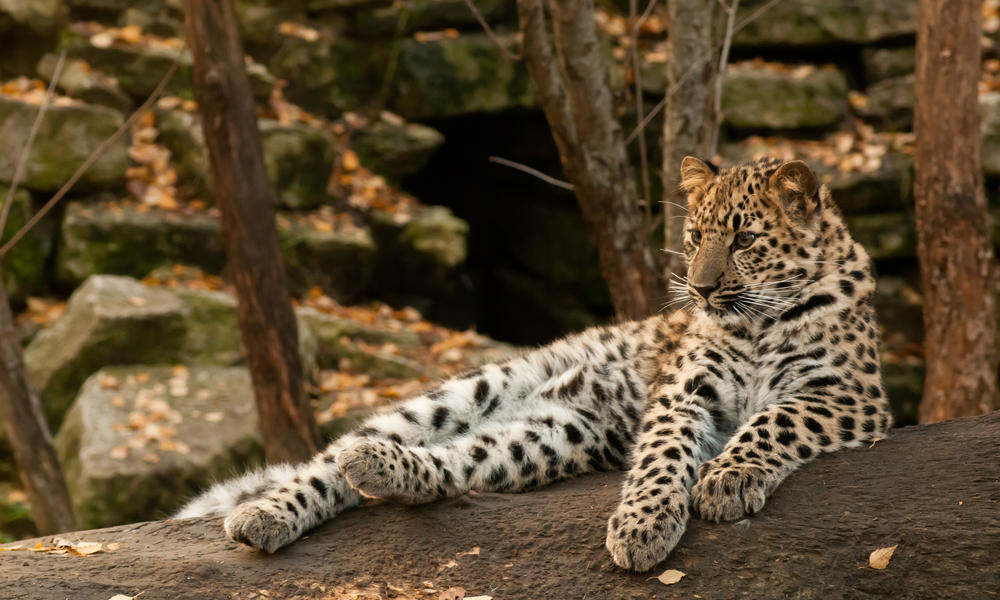
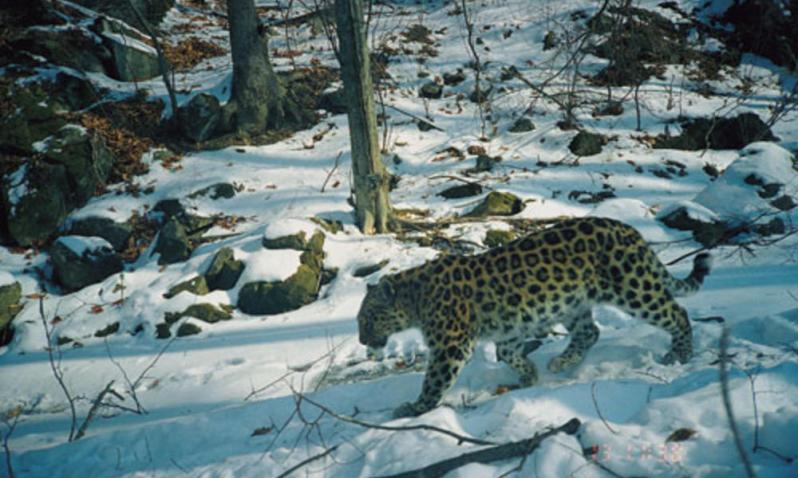
Amur Leopard, a very rare cat
Habits
Leopards are solitary creatures that only spend time with others when they are mating or raising young. They are also nocturnal and spend their nights hunting instead of sleeping.
Leopards spend a lot of their time in trees. Their spotted coat camouflages them, making them blend in with the leaves of the tree. They will often drag their prey into trees to keep it from being taken by other animals, according to National Geographic.
Diet
Leopards are carnivores, but they aren't picky eaters. They will prey on any animal that comes across their path, such as Thomson's gazelles, cheetah cubs, baboons, rodents, monkeys, snakes, large birds, amphibians, fish, antelopes, warthogs and porcupines.
Leopards are ambush predators; they crouch low to sneak up to their prey and pounce before it has a chance to react, according to the Animal Diversity Web, a database maintained by the Museum of Zoology at the University of Michigan. A leopard will kill its prey with one swift bite to the neck, breaking it.
Offspring
Leopards have a gestation period of approximately three months and typically give birth to a litter of two to three cubs in a den, according to PBS Nature. Each cub weighs just 17 to 21 ounces (500 to 600 grams) at birth, is blind and almost hairless. They depend on their mother for food and do not leave the den until they are 3 months old. At 12 to18 months, the cubs are ready to live on their own and at 2 or 3 years old will create their own offspring. Leopards live 12 to 15 years in the wild and up to 23 years in zoos.
Classification/taxonomy
Leopard characteristics are recognized in their classification as catlike carnivores (suborder Feliformia) and as roaring cats (genusPanthera). Their complete taxonomy, according to the Integrated Taxonomic Information System (ITIS), is:
Kingdom: Animalia
Subkingdom: Bilateria
Infrakingdom: Deuterostomia
Phylum: Chordata
Subphylum: Vertebrata
Infraphylum: Gnathostomata
Superclass: Tetrapoda
Class: Mammalia
Subclass: Theria
Infraclass: Eutheria
Order: Carnivora
Suborder: Feliformia
Family: Felidae
Subfamily: Pantherinae
Genus & species: Panthera pardus
Subspecies:
Panthera pardus delacouri (Indochinese leopard)
Panthera pardus fusca (Indian leopard)
Panthera pardus japonensis (North China leopard)
Panthera pardus kotiya (Sri Lankan leopard)
Panthera pardus melas (Javan leopard)
Panthera pardus nimr (Arabian leopard)
Panthera pardus orientalis (Amur leopard)
Panthera pardus pardus (African leopard)
Panthera pardus saxicolor (Caucasian leopard, Central Asian leopard, Persian leopard)