Congratulations! You have found the Masato Toys Forum!
Where Creative, Freethinking, & Insightful Humans (and non-humans) are always welcome.
Share, Learn, Create, Inspire: Click HERE to Join
SRBrant wrote:We need to focus our attentions against corporatism and not the ramblings of psychotic talk radio DJs! And I will NOT let paranoia and conspiracy theories tear the Kitsune Society apart!
Mayhap you are hanging out in the wrrong places then.
People say they all want the truth, but when they are confronted with a truth that disagrees with them, they balk at it as if it were an unwanted zombie apocalypse come to destroy civilization.
Wolfgang Halbig FOI Hearing Report Issued as Halbig's Legal Woes Mount
Cliff Notes Version: Halbig's hearing was nearly a total failure with the recommendation being the majority of his complaints be dismissed in their entirety, a finding that ALL documents have been received by Halbig; Newtown was found to be tardy in providing the Hochsprung emails.
Commissioner Matthew Streeter has issued his Report on the Wolfgang Halbig FOI Hearings of 4-23-15 and 6-3-15. The Commission's ruling was as predicted by Sandy Hook Facts, Wolfgang Halbig's attorney failed to show that Newtown failed to provide even a single responsive document.
You may download the Commissioner’s Report in it’s entirety here:
The entire FOI Commission will consider the Commissioner's report on July 8, 2015. Generally speaking, we can expect the report will be adopted as it is or with only minor technical changes. For example, the report incorrectly spelled "Sinko's" name as "Sinka".
Therefore, it appears that the ruling will be as follows:
FIC 2014-461 - Dash Cams, Porta-Potties, and Security System
Halbig had requested Newtown provide responsive documents as to Dash Cams, Porta Potty ordering, and the Security System installed at Sandy Hook on December 14, 2012.
At the hearing, Halbig further contended the Dash Cams and Security System documents were not authentic or not complete, offering as his proof, a screen shot of Sandy Hook Fact's video.
The Commission ruled entirely against Halbig, finding the all the documents were authentic and complete. As to the Porta Potties, the finding that Newtown had no responsive documents and therefore had fully complied. The Commission further found that Newtown had responded timely stating [Newtown's] respond was "nothing more than methodical, deliberate, and rigidly precise."
The Commission found that the Dash Cams were a true copy of the Dash Cam from Lt [Sinko's] Dash Cam; fully vindicating Sandy Hook Facts and in support of our videos and articles proving Halbig had indeed received the correct Dash Cam videos.
The Commissioner recommended Halbig's complaint #2014-461 be DISMISSED in it's entirety.
Note:
It does not appear that the Commissioner addressed several other requests docketed as 2014-461. Some of these requests include the Bio Hazardous Waste Removal contracts, the Sign-In Logs, and the Newtown School Board Minutes of 1-23-13. Perhaps these matters will be taken up by the full commission.
As to FIC 2014-823 Work Orders & emails The Commission further found as follows:
Wolfgang Halbig has received ALL documents responsive to his request.
Therefore, the issue is closed. They will not be receiving any other documents for this request.
The Commissioner found that Newtown was not prompt as to the requests for emails and was ordered to henceforth comply with promptness provisions of the Connecticut FOI Act.
Wolfgang Halbig spent $20,000 for two days worth of hearings. He was awarded no documents and the majority of his complaints where dismissed in their entirety. It should also be noted that the documents Halbig obtained at a cost of about $20,000, Sandy Hook Facts obtained for under $100. Sandy Hook Facts does agree that Halbig's hearing were a good show.
While Halbig's followers may think it was a victor for the First Selectman to admit "Homeland Security" (likely meaning the State Dept of Homeland Security) was on scene; all one really had to do to know this was refer to the report. The agency is listed as a responding agency; as would be expected of Mass Casualty Incident
The State of Connecticut Department of Emergency Services and Public Protection (Connecticut State Police)/(CSP) has appealed the Connecticut Freedom of Information (FOIC) ruling that the State Police must release to the public the Sandy Hook shooter's documents.
Back ground references are below.
In short, several of the shooters documents were seized by CSP in the investigation subsequent to the December 14, 2012 shooting at Sandy Hook Elementary School. These documents were not released with the final report.
The Courant and Sandy Hook Facts filed FOI request to obtain those documents and both were denied. The Courant appealed.
When the CSP denied Sandy Hook Facts' FOI request, the basis of the denial was that "items of personal property seized from a private residence in connection with an investigation into criminal activity are not subject to disclosure under the Freedom of Information act".
The Commission ruled in favor of Dave Altimari and the Courant ruling the items were public interest and should be released.
On June 26, 2015 the CSP filed a 31 Page Administrative Appeal.
The appeal again contends that the items seized are not subject to FOI, the argument the CSP made during the hearing. In fact, the CSP had attempted a motion o bifurcate the hearing to first determine of seized items were subject to FOI. The motion to bifurcate was denied.
The CSP Contends that the FOIC rulings were:
1. In violation of constitutional statutory provisions.
2. In excess of the statutory authority of the agency.
3. made upon unlawful procedure.
4. affected by error of law.
e. erroneous in view of the record.
f. arbitrary and capricious or characterized by abuse of discretion.
Sandy Hook Facts is directly affected by this court case as the CSP has also denied our right to access these documents.
It is clear that the Sandy Hook shooting is indeed a matter of significant public interest. Nationwide, laws and policies are written based on this incident. The incident remains in the newss daily.
We must ask:But for a case like Sandy Hook, why is there Freedom of Information at all?
The shooter's information is essential information and information that has been denied the public at large. This information includes photos of the shooter holding a gun to his head and the shooter in "dress rehearsal" clothing, writing, videos of the shooters activities including DDR, and many other articles that the public has a right to view.
This shooter is entitled to no public protection. Indeed, he should be hung from a hook in town square for the public to view. In fact, such open disclosure would do well to send many of the "on the fence" hoaxers on to other subjects.
It is clear that the public interest out weighs the states interest to keep theses matters from the public and we offer our full fledged total support to David Altimari and the Courant.
Timeline: Adam Lanza’s Life and Online Activity Part 1 (from birth to the Yale Child Center)
Everything we know about the events leading up to the Sandy Hook shooting, in order, and with references cited.
NOTE: Other shootings are only referenced here if a specific connection to the Lanza case is known. Also, all entries marking an online post from Kaynbred/Smiggles/Blarvink/Adam Lanza will be in bold. For screengrabs/links of a specific “Kaynbred” or “Smiggles” post, refer to the appropriate prior blog post.
The Office of the Child Advocate (OCA) of the State of Connecticut released a report Friday, November 21, focusing on Sandy Hook Elementary School (SHS) mass murderer Adam Lanza. The report defines lapses in integration of education and health care, and how untreated mental illness contributed to Adam Lanza’s overall decline.
Directed by the State Child Fatality Review Panel (CFRP), in late January 2013, the OCA was asked to investigate “the circumstances leading to the death of the children at Sandy Hook, with a focus on any public health recommendations that may emanate from a review of the shooter’s personal history.”
CFRP reviews unexpected deaths of children in the state.
The report is an in-depth review of records relating to Adam Lanza’s life, from early childhood through early adulthood, when he killed himself after shooting his way into SHS on December 14, 2012, and taking the lives of 20 children and six educators there.
“OCA reviewed thousands of pages of documents, consulted with law enforcement and members of the Child Fatality Review Panel, conducted interviews, and incorporated extensive research to develop the report’s findings and recommendations,” according to the report.
Key findings of the report include that Adam Lanza presented with significant developmental challenges from earliest childhood, including communication and sensory difficulties, socialization delays, and repetitive behaviors, while living with his mother, father, and older brother in New Hampshire.
After moving to Connecticut, Newtown’s school district provided special education services to Adam Lanza while a student at SHS and Reed Intermediate School, “but services were limited and providers did not identify any communication or social-emotional deficits.”
“Social-emotional challenges” increased for him after fourth grade, although the report notes as well that Adam Lanza’s school records indicate he was “well-liked” by his peers in fifth grade. The report also includes a letter from Nancy Lanza, his mother, to SHS at the end of grade four. Adam Lanza had been exited from special education at this point, but Mrs Lanza asked that the school continue to consider his educational plan going forward and consider the selection of a “nurturing” teacher for him in fifth grade.
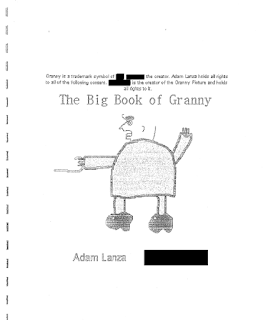
Key points also include indication of early preoccupation with violence, most notably in a comic book-style assignment he co-authored in fifth grade, “The Big Book of Granny.” The “graphic writing appeared to have been largely unaddressed by schools and possibly by parents.”
In eighth grade, Adam Lanza was placed in homebound educational status at his mother’s request, due to increasing anxiety he was experiencing. The report indicates that the “district provided little surveillance of [Adam Lanza’s] homebound status, which lasted an entire school year.”
“Recommendations from the Yale Child Study Center, where [Adam Lanza] was evaluated at age 14 (his 9th grade year), offered prescient observations that withdrawal from school and a strategy of accommodating [Adam Lanza], rather than addressing his underlying needs, would lead to a deteriorating life of dysfunction and isolation,” is yet another key point brought out in this report.
“Medical and education records reflect repeated reference to [Adam Lanza’s] diagnosis of Autism Spectrum Disorder, Anxiety, and Obsessive Compulsive Disorder,” the report states.
Further special education and therapeutic support, as well as taking prescribed medications, were recommendations that were not implemented.
A plan to return Adam Lanza to the school setting in tenth grade was not successful. He eventually finished school through independent study, tutoring, and classes at a local college.
“Records indicate that the school system cared about [Adam Lanza’s] success but also unwittingly enabled Mrs Lanza’s preference to accommodate and appease him through the educational plan’s lack of attention to social-emotional support, failure to provide related services, and agreement to his plan of independent study and early graduation at age 17,” is a key point emphasized in the report.
While Adam Lanza exhibited symptoms of Autism Spectrum Disorder and was diagnosed as such, “The likelihood of an individual with Autism Spectrum Disorder or severe problems with anxiety and obsessive-compulsive tendencies committing an act of pre-meditated violence, much less one of [Adam Lanza’s] magnitude, is rare,” according to the authors of this report.
Medical records do not show a need for mental health treatment, and his adult medical records “do not reflect awareness or diagnosis of ongoing mental health issues.” The report indicates a deterioration of his social, physical, and mental health in the last years of Adam Lanza’s life.
He ceased communication with his father, in 2010, and became “increasingly preoccupied with mass murder…”
He was involved with both parents (separated since 2002 and divorced since 2009) in recreational shooting, and had access to firearms and high capacity ammunition magazines in the home.
Mrs Lanza’s plan to move from Sandy Hook in 2012 may have exacerbated Adam Lanza’s fears of leaving the comfort zone of the home where he had isolated himself, following which Adam Lanza planned and executed the massacre at SHS.
The key points of the OCA report conclude: “In the course of [Adam Lanza’s] entire life, minimal mental health evaluation and treatment (in relation to his apparent need) was obtained. Of the couple of providers that saw Adam Lanza, only one — the Yale Child Study Center — seemed to appreciate the gravity of [Adam Lanza’s] presentation, his need for extensive mental health and special education supports, and the critical need for medication to ease his obsessive-compulsive symptoms.
“This report suggests the role that weaknesses and lapses in the educational and healthcare systems’ response and untreated mental illness played in Adam Lanza’s deterioration.” The report stresses that “No direct line of causation can be drawn from these to the horrific mass murder at Sandy Hook.”
Recommendations include improved screening and evaluation of children from very young ages, with outside expert evaluations “available to inform clinical and educational decision-making.”
Care coordination and information sharing among medical, community, and health providers; improved training of teachers, administrators, related service personnel, pediatricians, and parents concerning mental health issues; family focused support systems put into place; the integration of schools and mental health providers; less focus on “primary disabilities” and “more holistic approach to identification for special education eligibility”; and a need to increase expertise and services for children with developmental and mental health issues are further recommendations elaborated upon in the OAC report.
April 22, 1992: Adam Peter Lanza is born to Peter and Nancy Lanza in Kingston, NH.
April 29, 1992: At eight days old, Adam Lanza has an episode of apnea and stops breathing. He is admitted back to the hospital. (source: Office of the Child Advocate report, pg 15)
Late 1994: Adam Lanza undergoes a “birth to three” evaluation in New Hampshire, ostensibly in order to qualify for state-provided support services for special-needs children. Significant impairment is noted, especially in relation to his having “created his own language.” From the Office of the Child Advocate report, page 16.
The developmental assessment completed by AL’s Birth to Three provider indicated that AL “fell well below expectations in social-personal development.” The evaluator was unable to understand any of AL’s language, needing his mother to serve as an interpreter throughout the testing. Evaluators concluded that AL presented with “significantly delayed development of articulation and expressive language skills.”
1995: Adam begins pre-school in Kingston, New Hampshire. He attended school several days per week, receiving special education support services, including speech support and occupational therapy as recommended by his Individualized Education Plan (IEP). (source: Office of the Child Advocate report, page 17)
1997: The Sanborn Regional School District discontinues speech and language support services for Adam, “due to a perception that his challenges were not impeding his ability to learn.” Source: (source: Office of the Child Advocate report, page 17)
Early April 1997: A neurological/developmental evaluation notes that Adam is an extremely active young child—he never slept through the night, continued to make up his own language, and reportedly did not like to be held, kissed or hugged. He is observed and reported to have odd repetitive behaviors and severe temper tantrums. He is reported, at times, to “sit and hit his head repeatedly.” He did not tolerate touch or textures and refused to dress. Teachers reported Adam was “very quiet during groups.”
April 22, 1997: Adam Lanza turns five.
Late April 1997: AL’s parents seek an independent evaluation from a local hospital. It appears that as a result of this hospital evaluation, special education supports were reinstated. (source: Office of the Child Advocate report, page 17)
The independent evaluation, purportedly a speech and language assessment, showed that AL had several strengths that complemented his developmental challenges. AL was observed to be “friendly [and] bright,” with “good social language ability,” as well as a good sense of humor. The evaluator posited that AL may have had a sensory integration disorder, and that he displayed “many rituals” in his behavior. Significant speech and language support was recommended in addition to a follow-up with neurology, and work with an occupational therapist certified in sensory integration therapy.
May 1997: The Sanborn Regional School District completes its own developmental assessment of Adam Lanza. The report accompanying the assessment notes that the district had previously decided to discontinue speech supports “because the disability [did] not interfere with educational abilities.” The updated assessment confirms that AL still has a dramatic discrepancy between expressive and receptive language abilities (a 42 point standard score difference). This meant that AL understood a great deal more than he could communicate and that his ability to make his needs known in a variety of settings was extremely limited or delayed. Adam would not or could not speak in groups, and had noted difficulties with auditory memory and auditory processing—meaning he had difficulty taking in auditory information and then great difficulty putting out information. (Source: Office of the Child Advocate Report — note that this 2014 report argues that “The school district should have considered the information from the speech and language evaluation and the neurological evaluation conducted in 1997 together, as reported findings were strongly suggestive of autism.”)
May 1997: Adam Lanza’s Individualized Education Plan (IEP) — updated as a result of the examinations in the preceding month — provides him with a classification of Speech and Language Impairment and the plan recommends resuming speech and language services, twice weekly, with a focus on improving expressive language and articulation in spontaneous speech.
Fall 1997: An occupational therapy consultation by the school district notes that Adam displays inconsistent eye contact and scattered motor skills. Though there were reports of seizures in early childhood, records do not indicate whether these were actual epileptic episodes or simply vasovagal (fainting) episodes, or whether they were ever resolved through an in-depth neurological assessment. (Source: Office of the Child Advocate Report, page 18)
1998: The Lanza family moves to the Sandy Hook section of Newtown, Connecticut, after Adam’s father Peter accepts a position with General Electric. (source: Official Report Summary, pg. 28)
April 22, 1998: Adam Lanza turns six.
Fall 1998: Adam Lanza begins 1st grade at Sandy Hook Elementary School. He is reported to be reading at grade level and is determined to be “[a]bove grade level” in math. Educational concerns at this time focused on written expression–attributed to AL’s speech delays—an articulation disorder (difficulty with the mechanics of speaking) and weak fine motor skills (using hands and fingers in age-appropriate ways). (Source: Office of the Child Advocate Report, page 26)
October 1998: Adam’s IEP team summary indicates that the focus of intervention was for speech and language impairment. Adam is to be provided with speech and language support thirty minutes weekly and occupational therapy support 30 minutes weekly. (Authors of the 2014 report would conclude that these durations were minimal and likely inadequate.) Source: Office of the Child Advocate Report, page 27
April 20th 1999: Columbine High School shooting. Adam Lanza will join a forum dedicated to discussing this shooting ten years later.
April 22nd 1999: Adam celebrates his 7th birthday at the the Duck Pin Bowling Alley in Danbury, Connecticut, with 20 friends from Sandy Hook Elementary school. (source: Frontline: Raising Adam Lanza)
July 1999: Nancy Lanza’s undergoes a neurological evaluation. Results show that all testing was unremarkable, despite her claiming to numerous friends to have been suffering from a vague terminal illness at this time. The record notes that Mrs. Lanza was experiencing “significant stress in her life related to her husband.” Additional medical testing was recommended along with “psychotherapy for [Mrs. Lanza’s] emotional issues.” (Source: Office of the Child Advocate Report, page 30)
Fall 1999: Adam Lanza begins Second Grade. Due to Adam’s difficulties functioning in groups, Nancy begins coming to Sandy Hook Elementary School after-hours to assist him with completing lessons. This arrangement continues through 5th grade. (source: Official Report Book 8, file 00018285, Frontline: Raising Adam Lanza)
Fall 1999: Early in second grade, Adam’s occupational therapy is discontinued, although he is still having problems with fine motor skills (e.g., shoe-tying and zipping his jacket). Adults continue to describe AL as “conscientious, quiet, but more talkative since he was grouped with another second grade student.” He is described as attentive to detail. Sensory integration goals were removed from AL’s IEP. Emphasis remained on improving articulation through speech supports. (Source: Office of the Child Advocate Report, page 27)
April 22nd 2000: Adam turns eight.
Fall 2000: Adam begins third grade at Sandy Hook elementary. IEP reports note that his speech articulation has improved, although articulation difficulties were still seen to be impacting his ability to make his needs known in the regular classroom setting. During third grade, AL was reportedly “shy” and frequently ill. Records show that he needed to be drawn out in discussion. He was encouraged to participate and share his thoughts in school. There is no reference to repetitive or ritualistic behaviors during this period. An interim report in third grade indicates that AL made a “concerted effort to volunteer answers,” but would not ask many questions. His work was “neat and thoughtful” and he was a “good citizen.” He would follow rules, help others, and accept responsibility. (Source: Office of the Child Advocate Report, page 27)
April 22nd 2001: Adam turns nine.
May 18, 2001: Nancy Lanza writes the following email to Sandy Hook Elementary School administrators, confirming that despite Adam’s apparent progress in adapting to the class environment, he is at the same time experiencing anxiety and depression (names are removed in the source: Office of the Child Advocate Report, page 28):
Spoiler:
Adam is a quiet, considerate child with a tendency to withdraw. He has made tremendous strides in your school system and has benefited from speech therapy. He does, however, tend to ‘over focus’ on rules and can be very hard on himself as a result. This year has been a challenge due, in part, to a slight mismatch in teacher style and student style. I would like to take a moment to praise TEACHER’S recognition of this problem, as well as her efforts to resolve the issue. I realize the difficulty of modifying a classroom approach to accommodate an individual. ANOTHER TEACHER also has been very helpful in keeping Adam’s stress level at a minimum. I am hoping that next year Adam will be placed in a classroom with a more casual feel to it. He responds well to a nurturing environment, and I would like his emphasis to be on learning rather than coping. He focuses on his work, enjoys structure and always adheres to the rules, but a certain level of strictness seems to bring on anxiety and depression. I have appreciated TEACHER’S willingness to work with me on this issue. I believe that if Adam is matched to the right environment for his particular learning style, the process could be less teacher-intensive. That would free Adam up to enjoy the learning process with a better result for everyone . . . .
April 22nd 2002: Adam turns ten.
Fall 2001: Adam begins fourth grade at Sandy Hook elementary. He is deemed to have met all speech goals, and is exited from special education. However, the speech report only indicates that AL had “no error sounds,” an observation that did not speak to AL’s challenges with expressive language. (Source: Office of the Child Advocate Report, page 28)
2002:Adam Lanza’s parents separate. Peter moves out, leaving just Adam, his brother, and his mother Nancy in the Yogananda Street home in Newtown. (source: Office of the Child Advocate report, page 25)
Fall 2002: Adam Lanza begins fifth grade at Sandy Hook Elementary school. Above, he signs a t-shirt along with the rest of the grade’s students (his fifth grade year extending into 2003.)
2002-2003 school year: Adam and another boy write and illustrate “The Big Book of Granny” which is described in later reports as “a very dramatic text, filled with images and narrative relating child murder, cannibalism, and taxidermy.” There are conflicting reports as to which adults, if any, were made aware of it. As of 2013, the boy who collaborated with Adam on the project is living in a mental health facility; his mother recalls that he and Adam were close:
Spoiler:
[Her son] spent a lot of time with Adam during this period of time. She told police that Adam and her son would do typical boy things together and would ride bikes and play in the neighborhood. Adam often spent time at this friend’s house and the mother described Adam as “normal and polite.” Her son had also been to Adam’s house and had never reported any worries or unusual incidents.
2003: A pediatric record notes Adam’s obsessive-compulsive tendencies, including hand washing¸ leading to excoriated skin, and clothing rituals. There is no documentation in the pediatric record of any exploration of these issues or of a referral to a mental health specialist. The report (or perhaps another report from the same time period) also notes that Adam “plays this “exercise/dance game” for recreation,” referring to the game Dance Dance Revolution. (source: Office of the Child Advocate report, page 36 & 98)
April 22nd 2003: Adam turns eleven.
Fall 2003: Adam begins 6th grade at Reed Intermediate School. According to school records, he exhibited good effort, made independent application of grade-level concepts and skills, and showed great insight into the motivation of characters in stories he read, as well as solving mathematics problems. He was described as well-liked by his peers and showing appropriate classroom behavior, though his record indicates that he still struggled initiating conversation with anyone. (source: Office of the Child Advocate report, page 29)
April 2003-April 2004: Per present-day recollections from Adam’s father Peter (Source: Office of the Child Advocate report, page 36):
Spoiler:
He noticed that when Adam was between the ages of 11 and 12, he began to seem a little different, less happy. To Mr. Lanza, Adam grew more anxious and frustrated, though he did not seem to Mr. Lanza to be angry or aggressive. He didn’t like to be photographed or seen in pictures. Adam had trouble concentrating and seemed easily overloaded. He began avoiding eye contact and became increasingly anxious. Mr. Lanza reported that Adam experienced panic attacks that compelled his mother to come to school. April 22nd 2004: Adam turns twelve.
Fall 2004: Adam Lanza begins 7th grade at Newtown Middle School.
2005 – Throughout this year, Adam has numerous sick visits to doctors for sore throats, difficulty breathing, and marked weight loss. (source: Office of the Child Advocate report, page 40)]
April 2005: Concerned about his increasing anxiety at Newtown Middle School, Nancy Lanza moves Adam to a new school, St. Rose of Lima. Even though the move occurs so late in the school year, he does not complete the term, and only attends for eight weeks.
April-June 2005: During Adam’s brief attendance at St. Rose of Lima, his writing is sufficiently disturbing that his teacher brought them to the attention of the school principal’s attention:
Spoiler:
[A]fter my years of experience teaching 7th-grade boys, I know how they are supposed to act. But I saw Adam as being not normal with very distinct anti-social issues. Adam was a very intelligent boy but he was also very quiet, barely spoke, and never responded to his classmates’ kindness of trying to help him fit in . . . . I also remember Adam never wanting to participate in anything . . . . I truly do not believe that Adam’s parents were upfront with teachers about Adam’s mental capacities . . . . I remember giving creative writing assignments to students, instructing them to write a page or two on whatever they wanted to talk about . . . Adam would write ten pages obsessing about battles, destruction and war.
I have known 7th grade boys to talk about things like this, but Adam’s level of violence was disturbing. I remember showing the writings to the principal at the time, Adam’s creative writing was so graphic that it could not be shared.
May/June 2005: Adam’s parents abruptly withdraw him from St. Rose of Lima before the end of the school year, and he is “kept home for a period of time.” (source: Office of the Child Advocate report, page 38)
April-June 2005: Reports from the Yale Child Study Center in 2006 indicate that Adam did not return to St. Rose of Lima for eighth grade due to his views on religion, though it is not clear if this was a decision by the Lanza family or if was the school’s staff: “AL disapproves of religion because it is ‘illogical’ . . . [which] proved the downfall of a brief placement at a small supportive Catholic parochial school.” Despite this, he “wanted to keep wearing his school uniform for a time.” (source: Office of the Child Advocate report, page 37-38)
Early September 2005: Adam Lanza begins Eighth Grade at Newtown Middle School.
September 19, 2005: Medical records note parental concerns regarding Adam not sleeping well, not eating well, and “sleeping a lot during the day.” The same record notes that his weight had dropped to 98 pounds. He was approximately 5 feet, 8 inches at that time.
Some point between September 20-30 2005: Nancy Lanza takes Adam to the emergency room at Danbury Hospital for an evaluation, following anxiety episodes. She describes Adam to health care providers as having had “borderline autism” in the past, but having since “outgrown it.” She reports that Adam was having trouble in school, trouble in groups, and exhibiting repetitive behaviors which had gotten worse in recent days. She fears the “beginning of possible autism.”
Spoiler:
Hospital records described him as “anxious,” “withdrawn,” and “hesitant to be touched.” He presented as agitated, hyper-vigilant, and overwhelmed with fear. The clinical consultation resulted in diagnoses of Anxiety Disorder, [Not Otherwise Specified]; Rule out Asperger Syndrome; Rule out Autistic Disorder, followed by a discharge diagnosis of Asperger Syndrome and Obsessive Compulsive Disorder.
Mrs. Lanza declined an extensive medical work up for AL, indicating that he was already scheduled to see a psychiatrist in three weeks. AL was evaluated by the hospital crisis team and recommendations for therapeutic support were discussed with Mrs. Lanza. The hospital recommended additional evaluation by staff psychiatry. Mrs. Lanza declined this recommendation, stating that AL would be “better off” at home rather than staying at the hospital for further work-up. Mrs. Lanza thought that she could manage him at home and that he was not at risk or a danger to himself or others. Mrs. Lanza stated that she wanted to get him home because he was “very comfortable” at home and would not be as anxious.
Though Mrs. Lanza told hospital personnel that her sole reason for taking AL to the emergency room was to obtain medical permission to allow him to stay home from school indefinitely, the clinical team at Danbury Hospital provided information to her regarding next steps for evaluation and treatment. Hospital staff recommended a therapeutic educational placement at the Center for Child and Adolescent Treatment Services (CCATS), and the hospital offered a full evaluation of him to expedite admission to the school.
Mrs. Lanza declined the additional evaluation and referral as documented by the clinical team at Danbury Hospital. She requested that the hospital issue a note excusing AL from school due to the stress level it created for him. Hospital staff agreed to provide a note excusing AL from school for three days, pending an IEP meeting. Mrs. Lanza agreed in writing to return him to the Emergency Department should his anxiety symptoms increase at home.
September 11, 2005: Dr. Paul Fox, MD, diagnoses Adam Lanza with Aspergers Disorder. Dr. Fox “further indicated that Adam presented with [sic] significant social impairments and extreme anxiety, he lacks empathy and has very rigid thought processes.” (see the official Sandy Hook report, book 8, document 00179889)
September-December 2005: At some point subsequent to Adam’s emergency department visit, Mrs. Lanza visited the administrator in her district office and indicated her desire to “home school” Adam. Mrs. Lanza recounted her visit with Adam to the emergency department and her concerns regarding his anxiety. The administrator remembered that Mrs. Lanza said she had to take Adam back home because he was so anxious in the emergency department that it felt “abusive” to keep him there. The administrator did not feel it would be appropriate to home school Adam, and instead recommended that the family and school work together to try and meet Adam’s needs, even in unconventional ways if necessary.
October 18, 2005: Dr. Fox provides Nancy with an “indefinite excuse” note to removed Adam from school, which stated that Adam “should not attend school due to the lack of an appropriate placement” and his “mounting overwhelming anxiety.” (source: Office of the Child Advocate report, page 41)
Late November-Early December 2005: Dr. Fox writes this email to Newtown Public School officials (source: Office of the Child Advocate report, page 41-42):
Spoiler:
AL is a 13 year old boy who I have evaluated on 9/30/05, 10/18/05, and 11/15/05. He meets the DSM IV criteria for Asperger’s Disorder. AL presents with a significant social impairment including lack of peer relationships, avoidance of eye to eye gaze, lack of understanding of how to play or interact with peers. He avoids peer interaction and is very anxious around strangers. He lacks empathy and tends to employ a very rigid systematic thought process. He demonstrates intense emotional rage when his systematic world is threatened due to his extreme need for routine. He tends to take a very literal interpretation of written and verbal material. Concepts like metaphor, symbolism and intangible references are exceedingly difficult for him and can cause significant distress. He tends to have an overly precise quality of speech and tends to not comprehend emotional expression in others. He is phobic [of] physical contact, even with his own mother who has been his most constant and consistent individual in his life.
Due to his extreme anxiety and emotional discord due to minor changes in routines and/or his expectations he is unable to attend school.
Due to his need for systematic precision and logic there needs to be modifications in the school curriculum. For example, the English curriculum should focus on the grammar and writing in a clear precise way. Literary choices should tend to be more literal and less figurative. It would be constructive for AL to have an accelerated program in Math and Science by allowing him to take honor classes in the high school.
At this point I am strongly recommending that AL not be compelled to attend school. He has clearly demonstrated that the experience of the school setting which has an intolerable level of noise and unpredictable elements would promote extreme anxiety and discomfort.
If you have any questions please do not hesitate to call.
Late December 2005: An IEP meeting is convened in response to Dr. Fox’s recommendations. The school district offers to evaluate Adam, for the purpose of determining special education eligibility, primarydisability, and what support should be provided at the school. This recommendation was declined by Nancy, who stated that evaluations at that time would “not be in Adam’s best interests.” The IEP indicated that AL was to receive up to 10 hours of special education in the form of tutoring based on the psychiatrist’s belief that AL could not function in a regular education environment. The educational record indicates that potential evaluators would begin to meet with AL as tutoring progressed to try to establish rapport with him. There is no evidence regarding how or if the recommended 10 hours per week of homebound instruction was delivered during this school year. (source: Office of the Child Advocate report, page 42)
January-March 2006: AL remained home with his mother. Records indicate that AL may have received tutoring from both his mother and father each week. (source: Office of the Child Advocate report, page 43)
March 3rd, 2006: The Newtown Bee publishes an article “Newtown Middle School Lists Honor Students.” Adam Lanza is listed under the 8th grade honor roll. (Source)
March 2006: The school district contacts Dr. Fox requesting information about Adam’s availability for standardized CMT testing (Connecticut Mastery Test.) He responds, indicating that Adam should be exempt. The school district responds back:
Spoiler:
In order to exempt [AL] from taking the CMTS, we need a letter from you indicating that he is unable to attend school and is medically/emotionally unavailable for homebound instruction for the testing period and the make-up testing period . . . without this letter, we are mandated to send a certified teacher to [AL]’s house to give him the test.
The psychiatrist responded with a faxed note that AL was “medically/emotionally unavailable to be tested (CMT).” According to the psychiatrist, AL could not and was not receiving home-bound or hospital-based tutoring and he was not attending school at all. (source: Office of the Child Advocate report, page 43)
April 22nd 2006: Adam turns fourteen.
May 11 2006: The Newtown Bee publishes the third quarter’s list of Honor Roll students at Newtown Middle School. Adam Lanza is listed under the 8th grade honor roll, indicating that he was not going to be held back despite not attending school at all this quarter. http://newtownbee.com/news/81895 August 2006: A doctor’s visit with Adam and Nancy confirms weight and health concerns, and trouble sleeping. AL was 94 pounds at that time. The record indicated that he was “home schooled.”(Source: Office of the Child Advocate report, pg 70)
Fall 2006: Adam Lanza enters Newtown High School for 9th Grade, returning to the school system after an absence of nearly an entire year, though he is not held back. Meanwhile, his brother moves out to attend university, leaving just Adam and Nancy in the home. Adam’s attendance this year is scant, and based upon his IEP (Source: Office of the Child Advocate report, pg 59):
Spoiler:
[in 9th grade] Adam had been receiving tutoring for major academic subjects (up to 10 hours) but had also begun to come to the High School for a combination of tutoring and classroom work in Chemistry, Math, and Latin, depending on his ability to handle the environment.
Fall 2006: Peter Lanza seeks help through his Employee Assistance Program (EAP) to obtain a mental health referral for Adam (Source: Office of the Child Advocate report, pg 48):
Spoiler:
Per email correspondence from Mr. Lanza’s EAP consultant, the family wanted to obtain “evaluation and treatment” for AL’s Obsessive Compulsive Disorder. The family indicated, according to EAP coordinator, that the Lanzas would be willing to travel within the state “if there [was] a program/therapist to help their son, and them, as his disorder [was] significantly impacting the family as well.” Mr. Lanza’s emails indicate that the family was looking for a specialist who would be specifically knowledgeable about working with children diagnosed with Obsessive-Compulsive Disorder and Asperger’s Syndrome.
Timeline: Adam Lanza’s Life and Online Activity Part 2 (Adam & the Yale Child Study Center)
Everything we know about the events leading up to the Sandy Hook shooting, in order, and with references cited.
NOTE: Other shootings are only referenced here if a specific connection to the Lanza case is known. Also, all entries marking an online post from Kaynbred/Smiggles/Blarvink/Adam Lanza will be in bold. For screengrabs/links of a specific “Kaynbred” or “Smiggles” post, refer to the appropriate prior blog post.
The Office of the Child Advocate (OCA) of the State of Connecticut released a report Friday, November 21, focusing on Sandy Hook Elementary School (SHS) mass murderer Adam Lanza. The report defines lapses in integration of education and health care, and how untreated mental illness contributed to Adam Lanza’s overall decline.
Directed by the State Child Fatality Review Panel (CFRP), in late January 2013, the OCA was asked to investigate “the circumstances leading to the death of the children at Sandy Hook, with a focus on any public health recommendations that may emanate from a review of the shooter’s personal history.”
CFRP reviews unexpected deaths of children in the state.
The report is an in-depth review of records relating to Adam Lanza’s life, from early childhood through early adulthood, when he killed himself after shooting his way into SHS on December 14, 2012, and taking the lives of 20 children and six educators there.
“OCA reviewed thousands of pages of documents, consulted with law enforcement and members of the Child Fatality Review Panel, conducted interviews, and incorporated extensive research to develop the report’s findings and recommendations,” according to the report.
Key findings of the report include that Adam Lanza presented with significant developmental challenges from earliest childhood, including communication and sensory difficulties, socialization delays, and repetitive behaviors, while living with his mother, father, and older brother in New Hampshire.
After moving to Connecticut, Newtown’s school district provided special education services to Adam Lanza while a student at SHS and Reed Intermediate School, “but services were limited and providers did not identify any communication or social-emotional deficits.”
“Social-emotional challenges” increased for him after fourth grade, although the report notes as well that Adam Lanza’s school records indicate he was “well-liked” by his peers in fifth grade. The report also includes a letter from Nancy Lanza, his mother, to SHS at the end of grade four. Adam Lanza had been exited from special education at this point, but Mrs Lanza asked that the school continue to consider his educational plan going forward and consider the selection of a “nurturing” teacher for him in fifth grade.
Key points also include indication of early preoccupation with violence, most notably in a comic book-style assignment he co-authored in fifth grade, “The Big Book of Granny.” The “graphic writing appeared to have been largely unaddressed by schools and possibly by parents.”
In eighth grade, Adam Lanza was placed in homebound educational status at his mother’s request, due to increasing anxiety he was experiencing. The report indicates that the “district provided little surveillance of [Adam Lanza’s] homebound status, which lasted an entire school year.”
“Recommendations from the Yale Child Study Center, where [Adam Lanza] was evaluated at age 14 (his 9th grade year), offered prescient observations that withdrawal from school and a strategy of accommodating [Adam Lanza], rather than addressing his underlying needs, would lead to a deteriorating life of dysfunction and isolation,” is yet another key point brought out in this report.
“Medical and education records reflect repeated reference to [Adam Lanza’s] diagnosis of Autism Spectrum Disorder, Anxiety, and Obsessive Compulsive Disorder,” the report states.
Further special education and therapeutic support, as well as taking prescribed medications, were recommendations that were not implemented.
A plan to return Adam Lanza to the school setting in tenth grade was not successful. He eventually finished school through independent study, tutoring, and classes at a local college.
“Records indicate that the school system cared about [Adam Lanza’s] success but also unwittingly enabled Mrs Lanza’s preference to accommodate and appease him through the educational plan’s lack of attention to social-emotional support, failure to provide related services, and agreement to his plan of independent study and early graduation at age 17,” is a key point emphasized in the report.
While Adam Lanza exhibited symptoms of Autism Spectrum Disorder and was diagnosed as such, “The likelihood of an individual with Autism Spectrum Disorder or severe problems with anxiety and obsessive-compulsive tendencies committing an act of pre-meditated violence, much less one of [Adam Lanza’s] magnitude, is rare,” according to the authors of this report.
Medical records do not show a need for mental health treatment, and his adult medical records “do not reflect awareness or diagnosis of ongoing mental health issues.” The report indicates a deterioration of his social, physical, and mental health in the last years of Adam Lanza’s life.
He ceased communication with his father, in 2010, and became “increasingly preoccupied with mass murder…”
He was involved with both parents (separated since 2002 and divorced since 2009) in recreational shooting, and had access to firearms and high capacity ammunition magazines in the home.
Mrs Lanza’s plan to move from Sandy Hook in 2012 may have exacerbated Adam Lanza’s fears of leaving the comfort zone of the home where he had isolated himself, following which Adam Lanza planned and executed the massacre at SHS.
The key points of the OCA report conclude: “In the course of [Adam Lanza’s] entire life, minimal mental health evaluation and treatment (in relation to his apparent need) was obtained. Of the couple of providers that saw Adam Lanza, only one — the Yale Child Study Center — seemed to appreciate the gravity of [Adam Lanza’s] presentation, his need for extensive mental health and special education supports, and the critical need for medication to ease his obsessive-compulsive symptoms.
“This report suggests the role that weaknesses and lapses in the educational and healthcare systems’ response and untreated mental illness played in Adam Lanza’s deterioration.” The report stresses that “No direct line of causation can be drawn from these to the horrific mass murder at Sandy Hook.”
Recommendations include improved screening and evaluation of children from very young ages, with outside expert evaluations “available to inform clinical and educational decision-making.”
Care coordination and information sharing among medical, community, and health providers; improved training of teachers, administrators, related service personnel, pediatricians, and parents concerning mental health issues; family focused support systems put into place; the integration of schools and mental health providers; less focus on “primary disabilities” and “more holistic approach to identification for special education eligibility”; and a need to increase expertise and services for children with developmental and mental health issues are further recommendations elaborated upon in the OAC report.
September 13, 2006: Dawson College shooting. 1 dead, 12 injured. The shooter commits suicide as police close in. Adam Lanza contributes to the Wikipedia page associated with this event 3 years later.
September 2006: A Connecticut well-child record documents that AL was diagnosed with Obsessive Compulsive Disorder, Anxiety and Asperger’s Syndrome, and that he was to seek or was seeking psychiatric care in the community. (Source: Office of the Child Advocate report, pg 70):
October 24, 2006: Adam seen at the Yale Child Study Center by a clinic psychiatrist, Dr. Robert King. Kathleen Koenig, an Advanced Practice Registered Nurse, also meets with Adam as part of this process. The evaluation was purportedly to determine if Adam had Obsessive Compulsive Disorder in the context of a putative diagnosis of Asperger Syndrome. Dr. King sends a draft of his psychological evaluation of Adam Lanza to his parents, indicating that Lanza “appears to fall somewhere in the Pervasive Developmental Disorder (PDD) or Austistic Spectrum Disorder (ASD).” (see the official Sandy Hook report, book 8, document 00179815 & Child Advocate report page 49) Some notes:
Spoiler:
The Yale psychiatrist’s initial report observed that AL presented as a “pale, gaunt, and awkward young adolescent standing rigidly with downcast gaze and declining to shake hands.”
Adam’s mother told the Yale psychiatrist that he used to look at people but did not anymore. Adam then asked rhetorically, “Why should I have to.” When the doctor explained all of the information that a person could learn by looking at a facial expression, such as a smile, Adam stated that people could interpret smiles differently: “Some primates smile when they are frightened.”
When asked for three magic wishes, Adam could not think of any and instead he said that “he would wish that whatever was granting the wishes would not exist.”
“Asked, ‘What is a friend?’ Adam replied, ‘It is difficult to define — in whose culture do you refer?’ Told ‘yours’,’ he replied, ‘I do not know.’ Asked whether he would like to have more friends, Adam said no.”
According to the report, Adam displayed a variety of rigid, controlling, and avoidant behaviors including his refusal to open doors for himself because he did not like to touch the doorknobs, and his worries about contamination of grease, dirt, and dust. Adam was reported to be placing limits on his mother’s behavior (e.g. by not allowing her to lean on things because it was improper). He had a variety of food rituals as well, related to texture. The doctor noted that Adam had experienced a variety of marked changes in seventh grade, including no longer talking on the phone, using e-mail, or engaging in outdoor activities, and he had become increasingly socially withdrawn and reclusive. Adam reportedly had not had any psychological testing.
The doctor noted that it was “difficult to interpret” AL’s accelerated social withdrawal. However, the doctor considered that a “plausible explanation” might be that “social engagement (largely focused on activities) in the middle school years makes relatively few demands for social sophistication . . . . As Adam’s peers moved into early adolescence and middle school, the demands of social engagement changed dramatically, leaving Adam feeling more inadequate or ostracized, setting off a cycle of withdrawal and avoidance.”
“Beyond the impact of OCD symptoms on himself and his mother, we are very concerned about AL’s increasingly constricted social and educational world. Much of emphasis has been on finding curricular level of instruction. Inability to tolerate even minimal interaction with even older more mature classmates will have grave consequences for his future education and social and occupational adaptation unless means of remediation are found. Inability to interact with classmates will prove increasingly deleterious to education. We believe it is very important to reframe the discussion with school from issues of curricular content to much more urgent issues of how to accommodate AL’s severe social disabilities in a way that would permit him to be around peers and to progress, rather than regress, socially, as well as academically.”
“Understandably, AL’s parents have gone to great lengths to compensate for AL’s hypersensitivities and social difficulties and aversions by providing home-bound instruction.
However we believe that there is a significant risk to AL in creating, even with the best of intentions, a prosthetic environment which spares him having to encounter other students or to work to overcome his social difficulties. Having the emphasis on adapting the world to AL, rather than helping him to adapt to the world, is a recipe for him to be a homebound recluse, unable to attend college or work productively into his twenties and thirties and beyond with mother becoming increasingly isolated and burdened.”
October 25, 2006: One day after Adam’s evaluation by Yale, his mother Nancy emails the doctor regarding his recommendations, indicating that Adam would refuse taking any medication (Source: Office of the Child Advocate report, pg 52):
Spoiler:
Thank you for taking the time to meet with Adam yesterday . . . . I wanted to let you know that the options you presented are not going to work at this time. I would like to save you any further investment of your time.
As I mentioned during the telephone conversation previous to our meeting, Adam’s OCD component is strongly tied to Asperger Syndrome and he is adamantly opposed to medication. The OCD component is now based on superstition or in an effort to influence outside events or luck. I thought I had been clear that I was looking for individual intervention, perhaps some sort of behavior modification, for the Asperger Syndrome foremost, sensory integration disorder, and the two OCD like components that are impacting his ability to attend school.
His refusal to take medication would make it impossible for him to be part of the study group and will just further agitate him. He was quite angry about the line of questioning that the interview took. As you might expect from an Asperger child, he had no understanding of the metaphors, and was quite disturbed by the fairy godmother scenario you gave him. You mentioned that the wait list for treatment for Asperger is quite lengthy, and that the study group was the alternative. However, participation in a study group, with the implied possibility of medication, will not be helpful in this case. So while I very much appreciate your effort, this is not the right course of treatment for him.
October 26, 2006: Nancy write an email describing Adam’s experience during the Yale evaluation two days prior. The recipient’s identity has not been disclosed (Source: Office of the Child Advocate report, pg 53):
Spoiler:
She wrote in an email two days after the Yale evaluation that based on her research he did not “fit that mold.” He did not, according to her, have a “preoccupation with one interest, the inability to carry on a two-sided conversation, [or] the absence of caring about other’s expectations.”
She said that she felt “horrible” in the Yale interview process, and that AL was “frustrated, and angry and anxious” during the interview. “His palms were sweating so much that his shirt got wet and he looked like he could have cried at any moment.” Mrs. Lanza said that she felt like he was “being tortured.”
Mrs. Lanza wrote that the evaluation did not seem to have “even a glimmer of hope attached to it,” and may have made things worse. She was concerned that AL was so angry about “the whole thing,” that “short of strapping him down,” she didn’t think he would be willing to talk to another doctor for a long time
(Note that the footnote accompanying this entry in the Child Advocate report states that “In fact, the Yale APRN that worked with AL after the initial evaluation also did not feel certain that AL had an Autism Spectrum Disorder, including Asperger’s Syndrome. Rather, this clinician concluded that AL was primarily debilitated by anxiety and Obsessive Compulsive Disorder. Whether these diagnoses were co-morbid with or, in lieu of an Autism Spectrum Disorder is unconfirmed.”)
December 1, 2006: A psychological evaluation of Adam Lanza is performed by Newtown High School Psychologist Michael Ridley. Follow-up evaluations are performed on the 15th and 22nd later that month. Ridley concludes that “there is no evidence of a specific learning disability and that Adam’s issues relate to his identified emotional and/or Pervasive Developmental Disorder spectrum behaviors.” (see the official Sandy Hook report, book 8, document 00179889).
Late 2006: According to “Smiggles’s” response to the ShockedBeyondBelief thread “How did you find this forum?” Adam Lanza first discovers said forum, which he later registers to: “I think I found it through Google toward the end of 2006. I didn’t register for years because it seemed like the kind of website which would get you on a terrorist watch-list.”
December 2006/January, 2007: Adam types a letter to his father, requesting certain video games. They are to be delivered on January 6th (likely a “Christmas” gift exchange, arranged around their visitation schedule.) – Official Report
January 2007: Nancy writes to Kathleen Koenig, the APRN at Yale Child Studies Center, who had met with Adam again in the previous weeks (Source: Office of the Child Advocate report, pg 54-55):
Spoiler:
It was actually the best meeting AL has had with anyone. He was calm and conversational on the way home, which is very unusual…. As far as his comfort level … it isn’t just that he is painfully uncomfortable—he actually doesn’t feel safe. He often tells me that he is frightened, even in our own home and obviously more so in public. I think it is the fear that paralyzes him. His father will be bringing him over on Thursday so that I can get a couple of hours off, but please let me know if you need any input or if anything needs to be followed up at home.
February 1, 2007: Nancy Lanza writes the following email to Dr. Fox, concerning Adam’s ongoing treatment and his initial evaluation from Yale Center. This email confirms that Adam’s treatment at Yale was Nancy’s estranged husband Peter’s wish, and in asserting her firm hope that Dr. Fox (the community psychiatrist she prefers) really “take the lead role” in the process, she is likely trying to wrest control of Adam’s treatment back from his father (Source: Official Report, File # 00085896)
Spoiler:
Dear Dr. Fox,
Kathy Koenig will be contacting you at some point to discuss Adam. She is a clinician at Yale and has background In Asperger In teens. Adam’s father felt it was important to get Adam into that group and possibly (and eventually) get Adam into a teen support group over there. Whatever her suggestions are, I would like your thoughts on. You have spent the most time with Adam, and have the best understanding of his situation. The Yale group and Adam’s father are concerned about Adam’s socialization and that is something I hadn’t really focused on. I have been more concerned with keeping him as comfortable as possible and just getting through each day. Although there will be quite a few people involved in this process (Yale-Mike Ridiey-Sherry Earle), I really hope that you can take the lead role. Once everyone has had some Input, I was wondering if I could have an appointment with you to discuss what makes sense for Adam’s IEP.
I will be talking to Sherry Earle today about modifying the history. I will give her your number so that she can contact you with any questions.
Did you get a copy of the initial evaluation from Yale?
Thanks for all your help!
February 4, 2007: Adam Lanza creates his first (known) Wikipedia account, Blarvink. He does not do anything with the account for another 2 months. Source
February 7, 2007: Kathleen Koenig, an Advanced Practice Registered Nurse at Yale Child Studies Center, has the last of four face-to-face meetings with Adam Lanza (the first taking place as early as October 2006). She determines a primary diagnosis of Obsessive-Compulsive Disorder, with a secondary diagnosis of Autism Spectrum Disorder. (see the official Sandy Hook report, book 7, document 00017458 & Child Advocate Report pg 53):
Spoiler:
Adam was described by the APRN as “emotionally paralyzed” and severely limited in his ability to lead a normal life. During her conversations with him, he asked questions about schizophrenia and Obsessive Compulsive Disorder, but was unwilling to share if he was experiencing any of the symptoms of the disorders. She discussed with him the clinical components of these disorders and those of psychotic depression. She described Adam as having “many rituals and prohibitions for his behavior and the behavior of others.” Adam agreed, in part, with the clinician that he was emotionally paralyzed by anxiety, but he did not feel that he suffered because of it, nor was he willing to take medication.
February 2007: Peter Lanza discusses Adam’s treatment at Yale with Nurse Koenig via email, noting that Adam was “angry” about having to attend, that he “loathed” the clinician, and that he did not think the “process [would] help him.” Adam was requesting to have Peter present during sessions. Her response:
Spoiler:
The process of asking AL to talk with me directly about what is going on is critical. I appreciate that AL’s view is that he wouldn’t say anything differently if [the father] were in the room, but I think he’s wrong. His judgment about how social/family dynamics work in a therapy situation is no more on target than his views regarding doorknobs and hand-washing . . . . He wants to control how the treatment goes because his anxiety is nearly unbearable if he can’t feel he knows what’s going to happen. I understand that. At the same time, he can’t control the treatment because his thinking is distorted and irrational. I can’t agree to follow his lead!
In fact, when I talk with him alone he has to respond, and last time I pushed him a bit. I am not surprised that he was angry, that’s OK . . . . I told AL he has a biological disorder that can be helped with medication. I told him what the medicines are and why they can work.
I told him he’s living in a box right now, and the box will only get smaller over time if doesn’t get some treatment.
I’m fine to see him this week at 11. I am OK to talk with him and you at the beginning, but the session to address his issues has to be just him and me. I’d do it differently if I thought it would help, but I’m convinced it won’t. Let me know your reactions.
“Around February 2007″: Mr. Lanza wrote to APRN Koenig that Adam seemed to making progress. Mr. Lanza recounted a recent outing to the arcade and the mall with Adam, where Adam was able to visit a number of different stores. Mr. Lanza wrote that Adam“ha[d] not wanted to do anything like that for over a year,” and seemed to “enjoy the outing.” Mr. Lanza wrote that “it appears the time that you are spending with Adam may be paying off.” Mr. Lanza said he would follow up with a new appointment date. (Source: Office of the Child Advocate report, pg 55)
Late February 2007: Nurse Koenig prescribes a small does of the anti-depressant Celexa to Adam, apparently having overcome his previous total refusal to even consider medication. The resulting dispute indicates that the ensuing experience (real or imagined) undid any progress that had been made up to this point. (Source: Office of the Child Advocate report, pg 55):
Spoiler:
Immediately after prescribing the medication, the clinician received a call from the mother reporting that AL was “unable to raise his arm.” Mrs. Lanza stated that AL was attributing this symptom to the medication. An email from Mrs. Lanza to the clinic indicated that AL took the medication for three days. Mrs. Lanza wrote an email that AL experienced immediate and diverse symptoms associated with the medication, including “decreased appetitive and nausea . . . dizziness . . . disorientation,” disjointed speech, and sweating. She stated that “he couldn’t think. He sat in his room, doing nothing.”
Despite the APRN’s attempt to convince the mother that the medication could not be producing the problems with AL’s arm, and that other symptoms could be managed with time and appropriate dosing, Mrs. Lanza said AL would be discontinuing the medication.
March 2007: Nurse Koenig, having not seen Adam since the administration of medication, contacts Adam’s community psychiatrist Dr. Fox by email, stating that all agreed it would be better for the family to “work with one provider,” and that the “consensus” was that the community psychiatrist “would be the best person,” given that Adam really liked and trusted him. (Source: Office of the Child Advocate report, pg 57)
April 16, 2007: Virginia Tech shooting. Five years later, Adam would reflect that this event represented a sort of peak in his excitement over mass murder: “My interest in mass murdered [sic] has been perfunctory for such a long time. The enthusiasm I had back when Virginia Tech happened feels like it’s been gone for a hundred billion years. I don’t care about anything. I’m just done with it all.” (Source: Office of the Child Advocate report, pg 100)
April 22nd 2007: Adam turns fifteen.
May 2007: Peter Lanza contacts the Stamford Public Schools to see what special education programming that district could provide if Adam came to live with him. (Source: Office of the Child Advocate report, pg 58)
June 7, 2007: Adam, as Blarvink, makes an edit to the Wikipedia page for Newtown High School. His note (accurately) points out that he was deleting “vandalism” by a previous user, and thus he makes no actual contribution, but this edit does establish that he was closely reading the Wikipedia page for Newtown High School on this day.
June 2007: Adam receives medical treatment because of irritated hands related to obsessive compulsive hand washing. The note (possibly from the school nurse) stated that he continued to be followed without medications by the community psychiatrist and that a referral had been made to another doctor for a neurology workup. There is no ongoing correspondence beyond 2006, or any exchange of treatment records between the community psychiatrist, a neurologist, and the district. It does not appear that a speech and language evaluation – recommended 1 month previous – ever took place. (Source: Office of the Child Advocate report, pg 61)
Summer 2007: The education team begins to prepare to “mainstream” Adam for his upcoming Sophomore year, “moving him from reliance on one-to-one tutoring to participation in classes.”(Source: Office of the Child Advocate report, pg 62)
August 2007: A note from Newtown High’s school nurse’s describes Adam as presenting with “high functioning” Asperger’s Syndrome and anxiety. He was described by the nurse as “bright” and not wanting to be “defective.” The nurse stated that he wanted to be in school to increase his knowledge. The nurse noted a list of preparations for AL to come to class early, leave later from the classroom, and his continuing high level of anxiety, germ phobia, and sensitivity to smells. The note emphasized that communications with AL must be very clear:
Spoiler:
It is ‘more scary if he does not understand and rocks and withdraws. Being unclear can be devastating to this child and his family.’ He was to be brought to the nurse [if injured?] because he cannot process pain. He is non-emotional. He was to e-mail teachers if he wanted to ask questions. There was concern that fire drills ‘might freak him out.’ This was to be addressed by having a teacher stay with him.
Adam was described in this note as having come a “long way” with his “crisis team” and assistance from a trusted school employee: the head of security (Richard Novia, who would become acquainted with Adam through the Newtown High tech club, which Novia ran.) Source: Office of the Child Advocate report, pg 62
August 26, 2007: Just before the start of 10th grade, “a communication from a psychiatrist stated that the doctor had reviewed [Adam’s] history with [Nancy] and that he was confident that Adam was prepared and ready to attend Newtown High School as a full time student that fall.” Source: Report from the Office of the Child Advocate, pg 62
August 28, 2007: Adam Lanza, as Blarvink, makes an edit to the wikipedia page for Newtown High School, updating the number of attending students. His note for this edit includes confirmation that he attended an assembly at Newtown High School (likely the “New Student Orientation” always held in August) that same day:
Spoiler:
According to what the surrogate vice principal stated in the auditorioum to the 9th and 10th grades on 8/28, there are 1,737 students in Newtown High School this year. I Updated the page accordingly.
Pre-Fall 2007: Nancy write to a staff member at Newtown High School, just before the start of the school year, affirming that [Adam] “insists on walking through that front door,” and that he was “prepared.”
Fall 2007: Adam Lanza begins his Sophomore year at Newtown High School. He is initially scheduled to take Sociology, AP U.S. History, AP Chemistry, AP Physics, English, Math, and Latin, though this plan does not last longer than a few months. He also joins the Newtown High School tech club, run by Richard Novia. (Source: Report from the Office of the Child Advocate, pg 65)
Fall 2007: Nancy Lanza writes to one of Adam’s teachers (presumably the English teacher given the content of the email) regarding his special needs:
Spoiler:
She informed one of AL’s teachers that he worried about dying, being bullied, and that he was acutely aware that he was different from other kids. She feared that any story that referenced these social issues in a way that Adam could identify with would bring on periods of insomnia and a loss of appetite. Mrs. Lanza also noted, “[a]nother thing we might have trouble with is boy-meets-girl type [of literature]. An adapted reading list is being provided as a substitute for the standard curriculum.”
December 5, 2007: Westroads Mall shooting, 9 dead. 2 years later, Lanza edits the wikipedia page associated with this event.
Timeline: Adam Lanza’s Life and Online Activity Part 3 (Yale study, Homeschooling & College)
Everything we know about the events leading up to the Sandy Hook shooting, in order, and with references cited.
NOTE: Other shootings are only referenced here if a specific connection to the Lanza case is known. Also, all entries marking an online post from Kaynbred/Smiggles/Blarvink/Adam Lanza will be in bold. For screengrabs/links of a specific “Kaynbred” or “Smiggles” post, refer to the appropriate prior blog post.
February 2008: By this point, Adam had dropped most of his mainstream classes, including Sociology, History, Chemistry, and Physics and had arranged to complete English as an “independent study.” These decisions were communicated through Nancy’s contact with the school. It became clear that the recommendation for full time participation in regular classes was a goal that could not be met at that time. (Source: Report from the Office of the Child Advocate, pg 67)
February 14, 2008: Northern Illinois University shooting, 5 killed, gunman commits suicide. Armed with a 9mm Glock 19, a 9mm Kurz Sig Sauer P232, a shotgun, and another handgun. An article related to this shooting is found in the Lanza home almost five years later, by police: http://www.thesmokinggun.com/documents/adam-lanza-newtown-search-warrants-678452
February 2008: Adam Lanza’s medical records state that AL continued to be diagnosed with Asperger’s and Obsessive Compulsive Disorder but the records do not indicate what, if any, treatment was being provided or should be provided. In fact the well-visit form indicates that despite these issues, AL was receiving “no meds, and no psych.” Under the heading “Development,” next to sub-headings for “school,” “after school activities,” and “peer relations,” nothing is written except “10th grade.” The record notes that he was 112 pounds and almost 5 feet, 10 inches tall, suggesting possible anorexia at this time. (Source: Report from the Office of the Child Advocate, pg 71)
March 2008: Nancy is “again contemplating home-schooling AL, but worried that he would later be unable to show (a college?) all of his work with the Technology Club or work study.” (Source: Report from the Office of the Child Advocate, pg 67)
Summer 2008: records indicate that Adam was to receive Extended School Year Services (ESY), in the form of one-on-one tutoring from school staff. ESY services are for youth who, due to the nature of their disabilities, need an extended school year to continue to make progress with their educational goals. (Source: Report from the Office of the Child Advocate, pg 67)
Summer 2008: Adam hosts a “LAN party” at his home for the Newtown High Tech Club. Several friends attend. All reports from these friends indicate that nothing unusual happened; most of the attendees played Warcraft 3, Nancy met several of them, there were never any firearms seen, and Adam asked other students to take off their shoes and be “respectful of the house.” The party took place entirely in the basement, and none of the attendees entered the upper 2 floors of the house. (Source: Report from the Office of the Child Advocate, pg 72 & Official Report, file 00256598 and others)
August 2008: Medical records indicate that he Adam a history of constipation (possibly linked to his weight and nutrition issues) and was prescribed Miralax to symptomatically respond to this concern. (Source: Report from the Office of the Child Advocate, pg 71)
August 2008: The following e-mail exchange takes place between Adam (first) and Nancy Lanza. The context of the conversation shows that they had been discussing college degees, and that the conversation had turned sour. Given the time of night, they were presumably both still at home during the email exchange:
Spoiler:
August 2008 (AL is 16 years old, 11th grade): Email from AL to His mother, 11:25 p.m.
You do not seem to understand that I was attempting to comfort you with what I consider to be a maxim with which to live. You unfortunately probably still do not understand what I mean. As a disclaimer: I type nothing in this that is in a tone that is condescending, vindictive, malicious, snide, malignant, or any synonym that you can think of. I mean well.
If you believe that you wasted your life, as you seem to have insinuated, you will gain nothing from regretting it and will only depress yourself; you cannot change anything from the past. There is something that I can assure you of that will always be true: it does not matter if you live for the next one year, five years, ten years, fifteen years, twenty years, thirty years, fifty years or even 100 years; the day before you die you will regret ever worrying about your life instead of thinking of what you want to do.
Every new year that you do live, you will regret not having started anything that you wanted to do the year prior, only regretting the past more.
What I mean is that you should think of what you want to do today; not starting next year or next month, but today. Thinking that you are not going to be able to do anything in the future will only ensure that fate. Also thinking that you are too “old” is going to ensure the same fate.
It is not as though I do not mean that you are homeless and begging; I would spend my life savings to prevent that out of obligation for what you have done for me. My personality is merely inherently unmoving; I will not be upset over something that you cannot change. And you should not be upset either. What you should do is think about what you want to do.
I also want to mention that I purchased something two weeks ago on Newegg to double your computer’s memory without even saying anything until now. I do not try to avoid doing anything for you as you seem to think. I am glad that I was born, and I appreciate your having taken care of me. (It is not my fault if you have not detected as much of an increase in speed as I would have liked, however; I blame its outdated processor. I would change that if I could, but it’s not possible to do so for your model.) Please read the first paragraph again.
Email Response from Mrs. Lanza, 1:05 a.m.
I appreciate your effort to be a comfort to me. I apologize if I seemed angry or antagonistic. I was simply over emotional and as it is often the case worrying about the future. I admit that I have been feeling a bit overwhelmed by my circumstances lately, but in no way do I regret having raised two wonderful children. I have high hopes for you both and will consider my life a success if you and Ryan live happy and productive lives.
There are a few things that I do regret . . . one of the biggest is that I dropped out of college, believing it to be more important to help your father get through college. Financially, it was impossible for us to afford a college education for both of us, and it seemed more important that he receive a diploma. In some ways I regret leaving the workforce as it has severely limited my prospects for the future, but again, it was a decision that I made to take more responsibility for the house and the children, and to allow your father to concentrate on his career. I do feel that I was able to be a better mother and have been able to put great effort into raising you and your brother, so that regret is mitigated in that respect. On the occasion that Ryan or you show some appreciation for my efforts, I feel completely justified in that choice and dually rewarded.
I know that it is harder for you to show appreciation, and that it does not come as a natural response. I really do not want you to feel obligated in that way. I do not expect any help, financial or otherwise, from you or your brother, and would not accept it if it were offered. I am certain that I will not be homeless or begging on a street corner, as your father is obligated by law and morality to see that my 30 years of service and sacrifice are compensated for. He has assured me that I will live a comfortable life and that my health expenses are covered. He is an honorable man. I am grateful that I was married to someone who honors his responsibilities. He has also taking [sic] responsibility to provide a college education for both you and your brother, so that neither of you will have to struggle and sacrifice as we did.
If you choose to, you will emerge from college with a master’s degree of your choice, debt free, to pursue any career in life that you wish. When I think of what I would like to do for the future, I think I would like to get my college degree first. I just thought of that tonight, as a direct result of my conversation with you. I think it would be possible as I dropped out only a year shy of my degree, and it seems as I might be spending quite a bit of time on campus waiting for you to take classes, so why not take advantage of that?! I suppose I could take classes at the same time you are taking classes.
I agree with you when you say that I should try to think positively of the future and what I want to do today. There is nothing that I can do about my diagnosis, and I do try to be as healthy as I can, despite the prognosis. I am sure that you noticed that I exercise regularly and do my best to stay in good shape. It’s not like I have the attitude that since I will be crippled anyway I may as well give up and get fat and sedentary now. I am working hard to stay as healthy as I can, for as long as I can.
At some point, I might like to start a business. I sometimes toy with the idea of an internet business like my friend, [L], owns. (Did I punctuate that last sentence correctly?) Her website is [xxx]. You should have a look at it sometime and let me know what you think of it.
Anyway, I would like you to know that no matter what, I am very proud of the person you are. I have no preconceived notion of how you should react or respond. I know that you tend to be more reserved and less emotional and I do not perceive that as condescending malignant, or callous. You are pragmatic and stoical. These are fine attributes. I am glad to know that you are glad to be born and appreciate being taken care of. I love you very much and am more than happy to take care of you in any way I can. I suppose I have felt that you didn’t even notice how hard I try to make things as tolerable as possible for you and that has made me feel sad in a way. I am much happier now, knowing that you do not despise me for bringing you into this world. Above all, I want you to be happy, no matter what you choose to do.
You may not think I notice, but my computer is working faster and I have been able to download bank statements faster and search the websites quicker. I was able to get baseball scores for all the games in a split second, and watch a video clip that a friend sent without any freezing. I didn’t know that you had worked on it, so I thank you for your efforts. You should let me know when you do thoughtful things so that you can get credit!
As an aside, I am having a problem that has been ongoing for months. The cursor abruptly moves to a different place in text now and again when I am in the middle of typing a sentence. It is very strange and annoying. Maybe you can have a look at it sometime? Thank you for taking the time to send me this e-mail. I now understand your motive and meaning, and I truly appreciate it!
The Child Advocate report observes that this exchange “shows how freely [Nancy] shared her own anxieties and resentments with [Adam], as if he were an adult who could be a close confidante, and his response suggests that this may have been well beyond his relatively immature emotional capacities.”
Fall 2008: Adam Lanza begins his Junior year, but does not attend any mainstream high school classes this year. His IEP continued to classify him as Other Health Impaired and continued to offer him 10 hours of tutoring a week and a shortened school day, pending doctor’s approval. (Source: Report from the Office of the Child Advocate, pg 68)
Fall 2008: (same time period, different source, overlapping info) Adam Lanza almost entirely withdraws from public school, instead opting for home-school where “Nancy taught Adam the humanities and Peter met with Adam twice a week to handle the sciences.” An interview with Peter Lanza documents several emails from Nancy around this time:
Spoiler:
By 2008, when Adam turned sixteen and was going to school only for occasional events, Nancy’s e-mails describe his escalating misery. “He had a horrible night. . . . He cried in the bathroom for 45 minutes and missed his first class.” Two weeks later, she wrote, “I am hoping that he pulls together in time for school this afternoon, but it is doubtful. He has been sitting with his head to one side for over an hour doing nothing.” Later that year: “Adam had a rough night. He moved EVERYTHING out of his room last night. He only kept his bed and wardrobe cabinet.”
September 2, 2008: Adam Lanza begins Fall session at WCSU. He takes courses in Data Modeling and Database Design (which he later drops), as well as Introduction to Ethical Theory, an introductory philosophy course. http://www.nydailynews.com/news/nationa ... -1.1305968
October 2008: Billing records show one payment from Nancy Lanza to Adam’s community psychiatrist Dr. Fox; there had not been any such payments since July 2007, and there never is one again. He is never again seen by any mental health professional. (Source: Report from the Office of the Child Advocate, pg 39)
Late 2008: Nancy Lanza meets with Adam’s education team. (Source: Report from the Office of the Child Advocate, pg 68)
The school team agreed to consider granting high school credit for college assignments but did not support funding the family’s unilateral decision to enroll Adam in college. A curriculum was cobbled together with Mrs. Lanza playing a role in selecting the books Adam would read. She continued to report that his ability to attend high school was negatively and significantly impacted by his acute anxiety and asserted that he functioned better when his class work was concentrated into a single time block as in a college setting.
Mr. Lanza communicated regularly with Adam regarding potential course work and college classes. He also connected with a consultant on college education for youth with Autism Spectrum disorders to gain insight and advice to help prepare Adam for post-secondary experience.
December 25, 2008: A discussion takes place on the Super Columbine Massacre RPG forum that covers the topic of Anarcho-primitivist philosophy, which Adam would demonstrate an obsessive interest in two years later. Although he had not yet joined the forum, he was actively reading it by this time. (See explanation here)
2009: An otherwise undated “adolescent well-visit form” notes both nutrition and internet safety as areas of concern with regards to Adam (Source: Report from the Office of the Child Advocate, pg 72):
Spoiler:
A 2009 medical record also indicates that Adam was 5 feet, 10 inches tall and still weighed only 112 pounds. The same adolescent well-visit form indicates that the provider checked off that “anticipatory guidance” was provided regarding all issue areas contained on the form, including “nutrition advice,” “siblings/peer relationship” and “internet safety.” On the same form, under the heading “Development,” the provider noted that AL was in 11th grade and attending community college. Under “concerns,” it was noted that he had Asperger’s Syndrome and Obsessive Compulsive Disorder. Nothing was written under “after school activities” or “peer relations.” Under “Assessment,” the provider checked off “well child/normal growth and development.”
March 2009: Efforts are made by school staff to connect Adam, through a job coach, with an employer in the community, and an email to the team from that employer confirms that they were successful (Source: Report from the Office of the Child Advocate, pg 69):
Spoiler:
Adam interned with and was later employed for a time by an individual in the community for whom Adam did computer work. A written letter from this employer dated March 2009 indicated that AL was working “as an independent contractor” to resolve computer problems. The author of the letter indicated that AL was “cordial, professional” and displayed “expert attributes.”
March 2009: Education team records indicate that Adam’s schooling was going “much better,” and confirm that there continued to be no psychiatric involvement whatsoever. (Source: Report from the Office of the Child Advocate, pg 71)
April 6, 2009: The Polish student film “Bullet Time” is first released online with English subtitles. Lanza would later demonstrate admiration for the film on the same forum that the film itself recommends for aspiring school shooters, SCMRPG discussion (later called Shocked Beyond Belief.)
April 22, 2009: Adam Lanza turns 17. He is issued a Connecticut Learner Permit (to drive), #168573202 (see the full Sandy Hook report, book 4, document 00177484)
June 2009: An email from Nancy Lanza to Peter Lanza (Source: Report from the Office of the Child Advocate, pg 69):
Spoiler:
He wouldn’t go to the tutor today. He seemed like he would all along … I checked with him several times during the day and he said he would go, and even 10 minutes before we should leave he was getting ready to go, but then had a meltdown and began to cry and couldn’t go. He said things like its pointless, and he doesn’t even know what he doesn’t know. I tried everything to assure him and let him know it wouldn’t matter if he hadn’t finished the work, or couldn’t finish, or didn’t understand, and that’s what the tutor would figure out … even if we go back and review Algebra 1 … but he couldn’t stop crying, so I said we could try again next week.
June 25, 2009: Adam Lanza’s earns his diploma from Newtown High School, although this was earned with college courses. (Source: Official Report, file #00177484)
Summer 2009: Adam receives this email from his father, regarding Adam’s expressed desire to increase his course load (Source: Report from the Office of the Child Advocate, pg 69 – NOTE: the source only states “2009” for the timing of this email, but the context strongly suggests that it was sent after Adam completed his diploma, since his course load up until that point was being determined by Nancy and the education team):
Spoiler:
As we discussed, we will be working on your study skills in order to better prepare you for your upcoming increased college class load. Teaching post-graduate classes for the last 15 years makes me qualified to coach you.
I have cc’d your mother on this email and asked that she print it out and place it on the counter. I will continue to include your mother on these emails until such time that you regularly check for, and respond to, emails from me.
We will review your Math homework this weekend when I am in Newtown. Please complete your Math homework by Friday night at midnight. This deadline is not arbitrary. Learning to set and meet deadlines is a critical factor in time management.
Time management in turn, is a key study skill. Over the years I had had a number of students that have encountered problems because they have under estimated the amount of time required to complete their assignments. I find that students who are good at time management always do better than their less disciplined peers. Let me know if you have any questions.
Dad.
July, 2009: An email from Nancy to Peter continues that Adam is continuing to attend college, though it is not going well (Source: Report from the Office of the Child Advocate, pg 69-70):
Spoiler:
Something must have gone wrong with class today. He wouldn’t speak on the way home and had his hood completely covering his face. He went straight to his room and won’t eat. I gave him time alone to compose and have tried to speak to him twice now, but he just keeps saying “It does not matter” and “leave me” “I don’t want to speak of it.” Did you look at the syllabus? Is it possible he has already missed a deadline or not been prepared for a quiz/test? I don’t know what I should do. I don’t want to try to talk to him again because he sounds like he is on the verge of crying.
Timeline: Adam Lanza’s Life and Online Activity Part 4 (Columbine, Aurora, & shockedbeyondbelief)
Everything we know about the events leading up to the Sandy Hook shooting, in order, and with references cited.
NOTE: Other shootings are only referenced here if a specific connection to the Lanza case is known. Also, all entries marking an online post from Kaynbred/Smiggles/Blarvink/Adam Lanza will be in bold. For screengrabs/links of a specific “Kaynbred” or “Smiggles” post, refer to the appropriate prior blog post.
August 4, 2009: George Sodini kills 3 and himself (Collier Township Shooting) with 3 handguns, one of which was not fired. Adam Lanza makes edits to the Wikipedia page for this shooting 2 days later, confirming that he had accessed Sodini’s personal website, where Sodini had detailed his plans and motivations for the shooting.
August 24, 2009: Adam Lanza registers for the course “A+ Computer Repair” at Norwalk Community College. (see the full Sandy Hook report, Book 4, document 00183916).
December 13, 2009: Lanza responds to a thead “RL Pictures” (In Real Life) on the mg14c.net forums. He posts a childhood photo of himself (and possibly an adult photo, although it is known for sure, or if so, what it was)
December 30, 2009: Lanza registers the username “Smiggles” at ShockedBeyondBelief.com, a forum dedicated to the Columbine killers, and the phenomenon of mass shooters in general.
December 31, 2009: Sello Mall shooting. Five are killed. The shooter later commits suicide at his apartment. Adam Lanza makes edits to the Wikipedia page associated with the event less than a month later.
Late January/February 2010: Adam’s parents express concern to each other about his mental state as he approaches adulthood: “In early 2010, when Nancy told Peter that Adam had been crying hysterically on the bathroom floor, Peter responded with uncharacteristic vehemence: “Adam needs to communicate the source of his sorrow. We have less than three months to help him before he is 18. I am convinced that when he turns 18 he will either try to enlist or just leave the house to become homeless.”Nancy replied, “I just spent 2 hours sitting outside his door, talking to him about why he is so upset. He failed every single test during that class, yet he thought he knew the material.” Later that day, she wrote, “I have the feeling when he said he would rather be homeless than to take any more tests, he really meant it.” Nancy said that Adam had been pretending to go to classes and passing his time in the library.”
Late Feb/early March, 2010: Lanza quits his Combat Arms clan
March 16, 2010: Nancy Lanza orders an MD Arms 20-round drum magazine for her Saiga-12 12 gauge shotgun, via the site Gunbroker.com (see the official Sandy Hook report, Book 7, document 00159951)
April, 2010: Adam announces to his parents that he wishes to enlist in the military, and is rebuffed. “Then he announced that he was going to enlist in the military when he turned eighteen, in April, 2010; he wanted to join the Army Rangers, an élite regiment. “What do you do?” Peter wondered. “You tell him, ‘Adam, that’s unrealistic’?” When the time came, Adam didn’t sign up.” http://www.newyorker.com/reporting/2014/03/17/140317fa_fact_solomon?currentPage=all
NEWTOWN -- Adam Lanza aspired to be a Marine -- one of "the few, the proud."
Failing that, he planned to join another branch of military service.
That is what he told his mother, Nancy Lanza, his biggest cheerleader, and that is what she relayed to one of her closest friends, Ellen Adriani, of Newtown.
At first, Nancy Lanza supported her youngest son's dream. She liked the idea that the military would give him purpose, a career path and structure to his life. But the more she thought about it, the more she saw a downside.
"It became overwhelmingly clear to her that it (military service) wasn't right for him," Adriani said. "She squashed" any notion of Adam joining the Marines or any branch of the armed services by reminding him "that he didn't like to be touched," said Adriani, and that if he were injured, "doctors and medics would have to handle him to treat him."
Lanza, 20, harbored a dream of joining the military after he stopped taking college-level courses at Western Connecticut State University in Danbury, said a local merchant who knew the Lanzas. Adam Lanza first made his military aspirations known when he was 17, about the time his older brother, Ryan, was attending Quinnipiac University.
The Adam Lanza who went on a shooting rampage at Sandy Hook Elementary School in Newtown last Friday was outfitted for war. Only his targets were civilian, not military. He was clad in body armor, black clothing and wielding a Bushmaster and Sig Sauer rifles, both equivalents of a military M-16. He was also armed with a 9mm Glock originally used by the Austrian military and hundreds of rounds of ammunition.
Lanza was a familiar face at area shooting ranges in recent years, federal agents said, but not in the past six months. Nevertheless, he had ample opportunity to hone his skills firing off as many virtual rounds as he wanted in the comfort of his own home.
It was pretty clear he was an avid gamer from the trove of gory video and Internet gaming material investigators seized.
Peter Wlasuk, a Newtown plumber who claims he worked at the Lanzas' home, informed The Sun of London that Lanza would play soldier in violent video games such as "Call of Duty" for hours in a windowless, bunker-like basement.
"They had one poster of every piece of military equipment the U.S. ever made," Wlasuk told the British newspaper.
All three weapons Lanza stormed Sandy Hook Elementary School with were lawfully owned and registered to his mother, who grew up on a New Hampshire farm where she learned early how to shoot and handle guns.
Adriani visited Lanza's girlhood home last October, when the two of them attended a retirement party for Lanza's brother, James Champion, a police officer.
"She was a real farm girl," Adriani said, and had a respect for firearms. "She was one of the most responsible people I know. She kept them locked up. She was safety-conscious in every aspect of her life. If you got into her BMW and didn't buckle up, as soon as the car started making that ding-ding-ding sound, she'd stop driving and wouldn't start until you were safely buckled in."
Adriani met Nancy Lanza several years ago at the My Place restaurant in Newtown, where a number of their mutual friends hang out. The two shared a passion for gardening and good food.
All of what Adriani knows of Adam Lanza, she concedes, she learned from his mother, whom police said he shot first before going to the school to kill 20 children and six women before turning the gun on himself.
"Nancy was proud of both of her sons," Adriani said. "They were the world to her. Adam had been doing some computer work for someone I know. He was incredibily bright. And Nancy was looking into some schools for him and the possibility of moving, too."
As he progressed through the school system he did well academically, but socially he was an outcast. When anyone passed him in the hallway between classes, fellow classmates say, he would press himself against the wall, shunning even inadvertant physical contact.
Whether Adam Lanza was depressed about giving up his military dream and resuming his education, Adriani said she has no idea.
In the past year or so, Nancy Lanza had started traveling more, leaving him home alone more often, Adriani said. And Adam Lanza had started taking on more responsibility at home, grocery shopping, venturing out alone, too.
March 29, 2010: Nancy Lanza completes the purchase of a Bushmaster XM-15 .223 from Krystopher DiBella at Riverview Gun Sales in East Windsor. This is the rifle used in the Sandy Hook shooting more than 2 years later. (see official report document 00151485, book 4)
April 4, 2010: Last activity logged on thehighroad.org – this is the last known online activity associated with the Kaynbred moniker.
April 10, 2010: Nancy Lanza completes the purchase of an Izmash 12 Guage shotgun. Adam Lanza brings this weapon to Sandy Hook 2 years later, but leaves it on the passenger seat of his car. (see official report document 00151485, book 4)
April 22, 2010: Adam Lanza turns 18.
May 28, 2010: Adam Lanza completes a Connecticut Driver’s License application (see the official report, Book 4, document 00177484)
September, 2010: Adam sees his father, Peter, for the last time, as they visit the campus of a prospective alma mater for Adam after Peter had discouraged him from enlisting in the military: “Peter took Adam to visit Norwich University, which has a military program, but they concluded that Adam should take classes at Norwalk Community College, near Stamford, before attempting campus life anywhere. Adam wanted to take five classes, but Peter said it was more than he could cope with, and suggested two classes that they could work on together. Peter went to pick him up for a weekend visit, and Adam refused to go. Peter said, “Adam, we’ve got to figure out a system so I can work with you.” Adam was angry. “I hardly ever saw him pissed, but he was pissed,” Peter recalled. “And it was, like, ‘I’m taking the five classes. I’m taking them.’ ” It was September, 2010: the last time Peter saw his son. http://www.newyorker.com/reporting/2014/03/17/140317fa_fact_solomon?currentPage=all
Sept. 18, 2010: Email from Peter to Adam: “AL, I am very happy to hear from your mother that you are enjoying your classes. I hope that we can spend some time together soon, just let me know when you are available (even if only for a short period of time).
Late 2010: Adam stops responding to his father Peter’s e-mail messages. Peter continues to email Adam going forward, but they never speak or see each other again. (Source: Report from the Office of the Child Advocate, pg 96):
Nov. 17, 2010: Adam’s e-mail to an unnamed “cyber acquaintance”:
Spoiler:
It’s amazing how fast time passes. It’s hard to believe that it’s already been this long. I’m sorry about my mood over the summer. I was more depressed than I had ever been before. When I apologized for it, you said that I wasn’t behaving disrespectfully and that I never had been, but I don’t think I’ve ever been as kind toward you as you deserve. I don’t know how much it ever seemed like it, but I’ve always really appreciated your friendship. I’ve pretty much been a complete loner throughout my life but I’m sure that even if I had more friends, you’d still be my favorite person I’ve met. I’d like it if we could do something together again sometime. . . . Please email back and we could figure out something amazing.
December, 2010: Adam Lanza begins corresponding via Instant Message under the username “Smiggles”. (see the official Sandy Hook report, book 4, document 00194691)
Dec. 2, 2010: Peter emails Adam: “Hi. AL- I miss seeing you. I hope all is well with you. Let me know if and when you would like to shooting or go on a hike.” (Source: Office of the Child Advocate report, pg. 97)
December 25, 2010: Adam Lanza has last contact with his brother, Ryan (may be an approximate date, given phrasing of source: “After Christmas 2010, Adam Lanza had no contact with his older brother, Ryan, who had moved away for a job in New York City, according to records and a person with knowledge of the family.“) http://online.wsj.com/article/SB10001424127887324731304578193890846892734.html
2011:Peter Lanza, Adam’s father, remarries
February 18, 2011: Nancy and Adam Lanza shoot guns at Shooters Indoor Pistol Range in New Milford, CT. (see the official Sandy Hook report, Book 7, document 00222826)
March 16, 2011: Nancy Lanza purchases a Sig Sauer P226 9mm pistol. Adam Lanza armed himself with this gun at Sandy Hook less than two years later, but never fired it. (see official report document 00151485, book 4)
March 24, 2011: Nancy Lanza sells a Ruger Mini-14 Ranch Rifle to an unnamed party, apparently a gun store or pawn shop (see the official Sandy Hook report, book 7, document 00160023)
May 3, 2011: Adam Lanza starts the thread “Other Games Like This?” at gamefaqs.com, essentially a review of World of Warcraft that begs for similar experiences.
July 13, 2011: Peter’s e-mail to Adam reflects his knowledge that Adam does not reply anymore: “Hi Adam-Just a note to say “Hi”, Please confirm receipt.” (Source: Office of the Child Advocate report, pg. 97)
August 29, 2011: Nanc Lanza orders one Blackhawk Universal Tactical Sling and a custom gas plug for the Saiga shotgun, online. (source: Official report, ATF documents section)
September 18, 2011: “Smiggles” starts the thread “RIP Travis the Chimp!” at Shockedbeyondbelief.
October 12, 2011: An email is sent or received by someone in the Lanza home, with the subject line “re: Gunbroker.com”. The contents of the email have not been disclosed. http://www.thesmokinggun.com/documents/ ... nts-678452
November 18, 2011: Peter emails Nancy: “. . . I think you should tell Adam that he should plan to see me once per month to do something (hike, cross country ski, shooting etc.)” Source: Office of the Child Advocate report, pg. 97
December 10, 2011: “Smiggles” posts to the “RIP Travis the Chimp!” thread he had started on ShockedBeyondBelief: “I should call in on John Zerzan’s radio program about Travis. I’m really surprised that I haven’t been able to find anything he’s written or said about the incident, considering how often he brings up random acts of violence. It seems like Travis would be a poster-chimp of his philosophy.”
December 11, 2011: “Smiggles” posts to ShockedBeyondBelief: “I spent all day ruminating over how much I hate culture. Now I’ve calmed down and am left lying on the floor, numbly perplexed over the foreign concept of loving life.”
December 20, 2011: “Greg” calls the radio show AnarchyRadio, and speaks to the host about Travis the Chimp and the phenomenon of mass shootings.
December 21, 2011: “Smiggles” posts twice to the “RIP Travis the Chimp!” thread he had started on ShockedBeyondBelief:
Spoiler:
“Well, I feel schizophrenic”
and:
“My call starts at 38:00.
It didn’t go as horribly as I anticipated. I wish that I hadn’t spoken nonstop about Travis for so long, but I didn’t want to seem crazy by randomly bringing up a chimpanzee for unknown reasons. And despite my failed attempt at having a normal voice, I at least sounded less incoherent than usual. I normally speak much softer and swifter, with less articulation, less inflection, and more mumbling.
December 25, 2011: “Smiggles” posts to ShockedBeyondBelief: “I hate going through these extremely rare instances of wild mood swings that I have. I think this was the only time this year for me. I was as depressed as I get during my last post, and I’m fine with the interminable depression that I normally have, but now I’m incoherently giddy with glee. Well, relative to my baseline… Except now that I’m giddy, I can’t really say that I hate it because I think everything is delightful. If depressives cut themselves to feel better, I wonder what cutting a happy-go-lucker would do. Santa’s supposed to be jolly. I hope he visits me tonight so I can find out.”
January 23rd, 2012: Adam Lanza places a phone call to “Optics Planet” that lasts for one minute. Per official report: On 01/23/12, phone number 203-364-9879 connected to telephone number 800 504-5897@ 1535 hours for one (1) minute and one (1) second and again @ 1535 hours for four (4) minutes and forty-six (46) seconds. Telephone number 800 504-5897 belongs to Optics Planet.com, a company that specializes in selling binoculars, rifle scopes, military style clothing and sporting goods.
February 28, 2012: “Smiggles” logs on to ShockedBeyondBelief for the last time.
February 28, 2012: “Kaynbred” logs on to Northeastshooters.com for the last time. Since there’s no record that he ever posted there after registering, it’s unclear why he returned to this forum so late compared to the other “Kaynbred” associated forums. Perhaps he was accessing a private area of the forum. http://www.northeastshooters.com/vbulletin/members/members/14328-Kaynbred?tab=activitystream&type=all
January 5, 2012: Nancy Lanza purchases a Glock 20SF pistol. This is the weapon Adam Lanza would commit suicide with less than a year later. (see official report document 00151485, book 4)
April 22nd, 2012: Adam turns 20 years old. This is he same age that he previously compared Travis the Chimp to in terms of mental and emotional development at the time of his rampage and death (see Anarchy Radio call.)
June 2012: Adam Lanza cuts off contact with an unnamed friend he had met while playing Dance Dance Revolution at the local movie theatre. (see the official Sandy Hook report, book 7, document 00109542)
July 20, 2012: James Holmes kills 12 at an Aurora movie theatre, using a tactical shotgun, M&P15 rifle, and two Glock 22s. Note that this arsenal is similar to the weapons Lanza chose (two semiauto pistols, a long rifle, and a tactical shotgun)
July 23, 2012 (email from Adam to Cyber-Acquaintance): “My interest in mass murdered [sic] has been perfunctory for such a long time. The enthusiasm I had back when Virginia Tech happened feels like it’s been gone for a hundred billion years. I don’t care about anything. I’m just done with it all.”
Late-October 2012: Hurricane Sandy hits the Northeast coast. Electricity goes out at the Lanza’s home for several days, but Adam refuses to leave when Nancy suggests they go to a hotel. Acquaintances of Nancy say that she told them Adam “basically shut down”. (see the official Sandy Hook report, Book 7, document 001827430)
November 15, 2012: An e-mail from Nancy to Peter, after Peter expresses frustration that Adam has ignored his emails for over a year: “I will talk to him about that but I didn’t want to harass him. He has had a bad summer and actually stopped going out. He wouldn’t even go to the grocery store, so it’s been pretty stressful. Yesterday was the first time in moths [sic] I’ve been able to talk him into going to do his own shopping and his car battery was actually dead because it sat so long. I ended up spending most of the day getting it fixed and now I am going to have to start pressuring him to go out all over again.””
December 1st, 2012: Nancy emails a friend expressing concern about violent drawings she had found that Adam had made, one depicting “a woman clutching a religious item, like rosary beads, and holding a child, and she was getting all shot up in the back with blood flying everywhere.” She does not confront Adam about it. (approximate date, source reports this taking place “two weeks before the shooting”) http://www.nydailynews.com/news/national/emails-reveal-adam-lanza-family-illness-gruesome-images-article-1.1310276#ixzz2eP5QlLyx
December 5, 2012: Nancy emails a friend regarding a trip she was planning to take to London: “Sadly, that trip had to be rescheduled due to a couple of last minute problems on the home front…”
Late December, 2012: Nancy writes Adam a check, with the date field reading “Christmas Day” and with the memo section reading “CZ 83″ – a type of semiautomatic pistol. It’s unclear if the check was ever actually given to him. (See the official Sandy Hook report)
December 10, 2012: Nancy Lanza text-messages a friend regarding her trip to New Hampshire: “I was off to a rough start. Poor Adam bumped his head (really badly) and we were dealing with blood at 6:30 in the morning :( He is ok… it looked worse than it actually is.”
December 11, 2012: Adam Lanza sends the following email to an unknown acquaintance, almost assuredly someone he had met through the Columbine forum, and perhaps the same person he wrote to in July:
Spoiler:
Date: 12/11/2012 9:56pm
To: xxxxxxxxxxxxxx
I didn’t really look at the emails you sent earlier, so I guess I ought to respond now. About the Chinese mass stabbers, they blend together in my mind too much for me to say much. Although I guess that should make it even easier to talk about them…I don’t know. Who am I to even say anything on the topic? The inexplicable mystery to me isn’t how there are massacres, but rather how there aren’t 100,000 of them every year. So when it comes to rates and such, causes and consequences, domestic or forging (sic), in whatever context, I’m just going to be completely making things up because I apparently don’t understand any of it.
I’m clueless about Olga Hepnarova. While granting that modus operandi really isn’t that important, I just can’t get into vehicular slaughterers. It seem too mediated, like using remote explosives (too hot). And knives stray too far from the whole “mass” aspect (too cold). The aesthetic of pistols tends to be just (sic) right.
A list of mass shooter suicide notes…I never thought to compile such a thing before. I can’t remember ever thinking, “Whoa, that guy had a suicide note and I’m just finding out about this?! If their existence is every (sic) divulged by the police, it tends to be pretty public knowledge; and if their contents are released, they’re even more prominent. So I’m probably not privy to any information that you aren’t’ already well-aware of. All I can offer is to say that you can probably rest easy knowing that you aren’t overlooking too many lurking Jiverlys.
As far as the Holmies go…well, the .gif of him dancing on a llama was cute. I guess that’s all I can say about the whole Holmie thing since I can’t really relate to it. I don’t understand why there weren’t the “he’s just a poor misunderstood puppy who needs help” type flocking around Jared Loughner since that spiel ostensibly applied to him more than James Holmes. And speaking more generally, I don’t really understand why Aurora shooting was considered such a big deal all-around, as if such a thing had never happened before. It’s not like its 1984.
December 13, 2o12: The GPS unit in Adam Lanza’s vehicle logs a trip to Chimney Swift, a road that goes by Sandy Hook Elementary, and then back home to Yogananda street, from 9:09am to 9:32am (24 hours before the Sandy Hook shooting.) Lanza “turned right [off of Riverside] and drove past Dickenson Drive – the entry to Sandy Hook Elementary School. He continue approximately 0.6 mile, where he pulled off onto Chimney Swift Drive. There is no indication that he drove down Dickenson Drive onto school property.” He then turns around and follows the same route back home. (see the official Sandy Hook report, Book 3, document 00051670) (note: official report uses incorrect time zone data, see explanation here)
Published on Jul 3, 2015 After two hearings and nearly six hours of testimony, Connecticut Freedom of Information Commissioner Matthew Streeter finally weighs in on Wolfgang Halbig's multiple complaints...and so does Keith Johnson.
after watching the above vid, I checked out the 'Panic over Porta Potties' vid he referenced. gold.
Published on Feb 2, 2015
Theories vary, but Hoaxers like Wolfgang Halbig and Professor Jim Fetzer agree that the very presence of Porta Potties at the scene of the Sandy Hook Elementary school on December 14 is cause for a Congressional investigation. When did the Porta Potties arrive? Who was the Incident Commander? Does the presence of these plastic outhouses suggest that SHES was the scene of an active shooter drill? These questions answered in this edition of Sandy Hook Hoaxers Debunked!
Special thanks to CW Wade for his exemplary research into this topic.
with a little added bonus in the comment section:
Spoiler:
Dagwood GlobalMMA 5 months ago
You may want to bone up on your internet research capabilities. I found 203 items on Halbig in .38 seconds using Google to search the Orlando Sentinel's online news article archive. Halbig has 100's of pages of background-corroborating physical evidence "IN PRINT" from one of the countries major newspapers dating back to 1876 recognized as an "historical state of record" Florida for news and information. https://www.google.ca/search?num=50&biw ... MeQzYTKn68
Go through every one of them. 30 years of Orlando Sentinel articles about Halibig... his school & school system administration positions, his businesses, references to TV appearances, regional & national school system clients, his volunteer work, & more. A real critical thinker would read all of these stories by a major US newspaper and then reevaluate their position in light of new undeniable information. How can you debunk hundreds of corroborating Halbig background references here.? How can anyone debunk this. This would be almost as big a conspiracy as Sandy Hook may be. I suggest you add this to your exhaustive research material against Halbig and then reevaluate your position with the new information here. Critical thinkers are sometimes not what they seems to be.
Google Site Search: articles.orlandosentinel.com
About 203 results (0.38 seconds)
Hide replies
SuperAceuno1 5 months ago
According to the links you provided Halbig said "A deadly school shooting ``can happen any time, anywhere,'' said Wolfgang Halbig" And wasn't the "National Institute for School and Workplace Safety" the company thats national headquarters was only a P.O, box? Plus he claimed he was let go because he confronted higher level administrators, But Laurie Marshall said he never discussed mold issues with the schools superintendent and he was simply let go because his annual contract expired, Either Halbig or Laurie Marshall is lying, Which person is more credible? Halbig, a former executive director of the National Institute for School and Workplace Safety who said he was let go from his job in Lake last year, in part because he confronted higher-level administrators about the district's mold problems. District officials said Halbig was let go simply because his annual contract expired. He never discussed mold issues with schools Superintendent Susan Moxley, said the district's executive director of human resources, Laurie Marshall.
·
Dagwood GlobalMMA 5 months ago
+SuperAceuno1 I think what you need to do is to debunk the 200+ references in the Orlando Sentintenal where their reporters for over 30 years say Halbig is has been a senior school adminstrator and school safety director... as well as a regional and nationally recognized school safety expert. With all of those articles involving him training school regions & first responders across the US on school schooting response & procedure. Read every article there it will take you a long time, Orlando Sentintenal. Did Halbig hack the Orlando Sentienal online archive and write dozens of school safety articles and hundredes of refences to him in them? Did the "Hoaxer" community enlist Anonymous to do it? With this evidence IT IS IMPOSSIBLE FOR ANYONE TO DEBUNK HALBIG'S 30 YR SCHOOL SAFETY BACKGROUND or HIM BEING A REGIONALLY & NATIONALLY RECOGINZED EXPERT ON SCHOOL SHOOTING SAFETY PROCEDURE! Halbig is who he says he is, PERIOD! It is an inarguable fact as I've show here. All of the keyboard warrior-online-forensic-sleuths don't even know how to do a simple Google site search. I did 1 single Google search of the online archive of the nearest large regional newspaper's to Halbig's residence in 'less than a second'. In less than 1 second I found hundreds of background validating references in inumerous articles THAT WOULD HOLD UP IN A COURT OF LAW documented in nationally recognized major newspaer founded in 1876. Again, the Orlando Sentinel is a "historical book of record" for the state of Florida. How can you debunk that!!! Anyone that still tries to knock down or trivialize Halbig's background after going through all of the links and articles I've provided is a mental midget. Unfortunately, there will be many a mental midget who will refuse to look at the undeniable well-documented evidence and still go on with their idiocy.
· 1
SuperAceuno1 5 months ago
+Cilo Morales Thats not advertised as a huge nationwide company, Apples and oranges
·
charles moose 5 months ago (edited)
lol Keith johnson and superaceuno get blown the fuck out. the only thing he's good at its shit talking. you can tell in seconds when listening to halbig speak that he's determined and sincere. a bit senile possibly, but that comes with age.
oh and about this "he verbally requested documents". nope. he might have done that at the very beginning but he has an order to show cause hearing with the town to see why they will not give halbig the simple information he has requested
·
SuperAceuno1 5 months ago
+charles moose Halbig is determined to collect donations and tries to sound sincere because thats how to rope in the unsuspecting the same as televangelists have done since before most of us were born, Trusting anyone seeking donations online is taking a "Leap Of Faith" the same as outlined in that old Steve Martin movie, Sylvia Browne operated much the same way by being less than honest while generalizing and pandering to the audience, Aryanempires has evidence of Halbig, Fetzer, Tracy and Shanley all being in bed together before Shanley had his meltdown, Shanley stated he offered to up Halbigs share from 10 to 20 million so that shows they were having some discussions of personal profits for their efforts, Its been proven Lanza existed and the school was open and operating, Those two facts alone make most of the self professed truthers evidence worthless garbage, I've only known about Keith for a few weeks and we have only spoken to each other in open comments for all to see, And even though his debunks aren't earth shattering evidence he's proven his claims in every video he's posted so far and will surely keep doing it, And you have to request foia documents thru official channels by paying the $30 just like anyone else, He can say it a thousand times and that doesn't change the fact that he has to follow the same procedures as anyone else, He claims he gave a lawyer 10 thousand to obtain them but by time he got them others had already posted them online
·
charles moose 5 months ago
+SuperAceuno1 sure speculate, shit talk amd still keep lumping him in with shanley and fetzer all you want. i'll stop defending halbig when he gets the school staff emails, school work orders, even the porta potty records and any other records that should be, by all means, accessible. especially to someone with halbigs expertise and proven background as a dedicated public servant for over 30 years.
he drew up the order to show cause hearings, so he did something right there unless the 20+ documents i read on the subject were all falsified
i know you like to lap up the debunkers snide remarks, smear tactics and lol so funny xD photoshopped pics of researchers but pull your head out of your ass, guy.
Read more
·
1notgilty 5 months ago
+Dagwood GlobalMMA - You are 100% correct. Mr. Halbig's decades of experience in school safety would qualify him to be accepted as an EXPERT WITNESS in any court in America. That's a fact. Now, people may argue with his conclusions, but they can't legitimately discount his credentials as an expert in the field of school safety.
·
SuperAceuno1 5 months ago
+charles moose I never make personal attacks on anyone on YT over their beliefs on Sandy Hook but do try to open their eyes to the fact it was most likely a heinous crime committed by an insane and alone Adam Lanza that was fascinated with past school shootings, Have you ever known anyone that murdered or was murdered by somebody that lost touch with reality? It happens all the time everywhere but targeting innocent strangers and especially kids is rare, The main reason people claimed this was a government psyop was because of the rush to blame the guns and try to restrict types and mag sizes, Obviously that failed and the big winners ended up being the NRA and the gun and anno manufacturers, I'm pro gun all the way and have two loaded 9 mm's within reach right now, I was just playing with my brother in laws new Keltec KSG a few nights ago, Its awkward and my hand hit the trigger guard everytime I racked it, It needs that handle to make it easier to rack in my opinion, I really don't understand why so many want to attack the people that believe it was an actual mass murder, But I do think Halbig is taking advantage of the situation, If he wouldn't have been trying to solicit $250,000 in donations he wouldn't look like a scam artist, Can you think of any reasons why he would need that kind of money?
·
Brian Neal 5 months ago
where in all of the reports on halbig does it say anything about him leading an investigation after a MCI ,and as a director of security ( top rent a cop ) why was a quarter of a million dollars of equipment stolen from his schools ,why was his house robbed?, why did none of his business adventures last. ,, it is good if someone can come up with ideals to prevent crime but no crime is preventable , where is his experience in MCI or ACTIVE SHOOTING drills , He claims that he help with the Columbine investigation ,but I couldn't find his name in any report or the list of people involved
·
SuperAceuno1 5 months ago
+1notgilty He spent school money on a device that was supposed to detect drugs and weapons that was proven to be a worthless tool that couldn't even find lost golf balls like it was originally supposed to do, That shows he's gullible at the least, His "National Institute for School and Workplace Safety" website doesn't exist anymore so it seems his services weren't in big demand, Just because he gave seminars on the subject it doesn't mean he kept up with the changing trends in modern times or that he knows anything about building maintenance of 58 year old buildings in areas that have ice and snow during the winters
·
Brian Neal 5 months ago
+1notgilty just because someone had good credentials in the past , doesn't make them as good now as they were before , in the videos of his 34 questions, he asked questions that have nothing to do with the investigation , ( why were the kids organs donated ) or where did he get his facts , about the 12 potties when there were only 4 seen at the school and firehouse, or why did the first responders park a quarter mile from the school ,( they would have been parked out past the school ) why did lanza drive past 8 other schools ? ( he would have had to drive all over the town to do that ) in other words many of his questions do not make sense, and the ones that do were answered but he refused to believe the answers because in his mind it should not have happen that way , he wants the truth but refuses to accept it
·
Forlornguild 5 months ago
+SuperAceuno1
Donations? He pulled in under $30,000, go look at any of the actor's donation pages raking in hundreds of thousands each, and in some cases millions. Talk about a scam? What kind of people accuse others of exactly what they are doing?
·
Brian Neal 5 months ago
+Forlornguild which parent is accusing halbig, and why did he get less then 30,000, is it because there's not as many people that believe him as you think there is , or that even theorist think he's a fraud
·
Forlornguild 5 months ago
do you mean "in theory think he's a fraud"? The reason Wolfgang's message doesn't receive the millions that the fraud's do, is because Woflgang doesn't have the national broadcast system marketing his endeavor, whereas those protraying themselves as victims have an entire broadcast system and corrupt government to market their bogus cause.
·
Brian Neal 5 months ago
+Forlornguild he had his face book pages , how many interviews has he done with other theorist or debunkers , how many thousands and thousands have view the interviews, how many videos were made with his questions and theories in them ,how many viewers watch those videos , hundreds of thousands of people heard of halbig ,but it seems that only a small percentage believe in him
·
charles moose 5 months ago
+SuperAceuno1
blah blah blah. irrelevant wall of text.
it seems like keith couldnt handle the banter and had to clean up this comments thread. i wonder if he blocked me, too. what a fucking coward,
·
SuperAceuno1 5 months ago
+Forlornguild His stated goal was $250,000 though, What would he have ever needed that kind of money for? As soon as he mentioned exhuming graves he looked like a crackpot, If they would have honored that request it wouldn't have stopped him from pushing on with his circus act because he has benefited from it in various ways from getting an audience to listen so he can attempt to launch new business endeavors to donations, Most people don't claim cash donations for obvious reasons so its possible he has received more than what people know, I'm not going to call him a thief but its my belief that he is less than honest or he wouldn't have kept deflecting when that lady that interviewed him on her radio show kept pointing out the official report answered all of his questions, Anyone that thinks its a major cover up by hundreds of people should offer real evidence instead of making assumptions and speculating, Surely at least a few of those involved in a cover up would slip and tell somebody that would expose them
·
SuperAceuno1 5 months ago
+charles moose As irrelevant as it is it makes way more sense than the everything is a hoax and nobody ever died claims that are the norm on youtube nowadays
·
Brian Neal 5 months ago (edited)
+charles moose
if halbig is an expert , why would he turn down having a witness on the phone when ask if he should stay on the phone ( who was a radio host and recording the conservation ) when 2 police officers came to his house ( he told the radio host the police were thee ) and threaten him , if at that time he has been threaten before , it's things like this that halbig claimed to have happen that proves that he is not much of an expert
·
Brian Neal 5 months ago
+charles moose if halbig is an expert ,why is his facts wrong ?