This century functions as a bridge between the Early modern period and the 20th century with which we are all so familiar. In some of my other threads, and especially in my thread on classicism, I looked at some of the seeds of new thought that were starting to grow, but it would be this later era where there was truly an explosion of openness to new ideas embraced by the wider public.
The Romanticism is fairly well known and Ive discussed it to some extent here before. Romantic reflections on a heroic past that manifested in many forms of culture that became fairly mainstream. The works of Richard Wagner are probably the best known example.
Wagner is also a great example where culture started to spill into intellectual thought and at the tail end even politics.
This is also a time when people were reflecting on the industrial revolution and how it made the world a much uglier place. How had the advances of civilizations culminated in children working long hours in factories in dirty cities? People wanted to move away from that and return to the original essence of life, starting wandering groups that would go on treks and hikes together, singing folk songs and telling folk tales. People could truly value the simple things they took for granted until they had seen the alternative.
In the 2nd half of the century things get really interesting as these new ideas begin to integrate mysticism and occultism to create radically new movements and thoughts. A well know early example of this is Theosophy, a new religious movement founded in 1875 which incorporates Greek philosophy, European occultism, and influences from Buddhism and Hinduism.
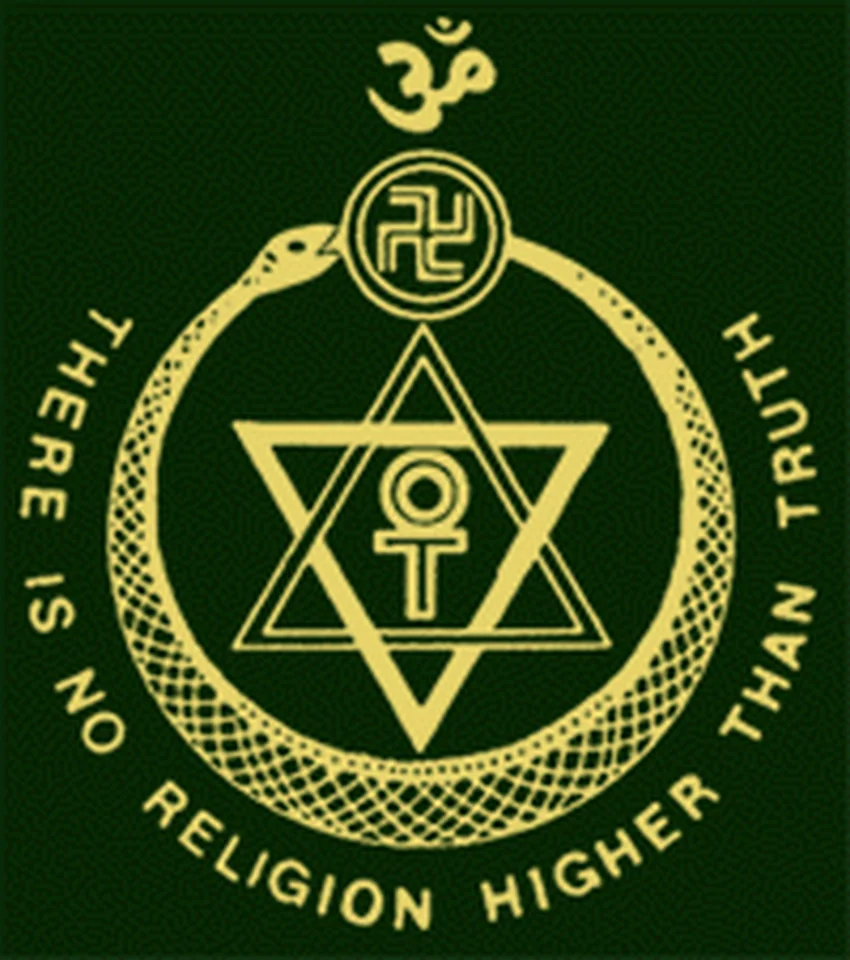
https://en.wikipedia.org/wiki/Theosophy
This is also the first time we see Neo-paganism where it is not quickly snuffed out by the church. This was possible people the Romanticism had given people an avenue to reflect positively on past beliefs without the need to shame it as devil worship. Positive views of the beliefs specifically are already clearly articulated by Franz Mone in 1818 when he states that Heathenry did not cease with the arrival of Christianity as it only removed public practices, while it survived in its inner sense because of the characteristic life of the folk. As you see the christian anxiety of losing its monopoly to other beliefs was now competing with the romantic anxiety of losing ones culture and sense of self to a cold industrial world. Its also quite relevant that the late 1800s is also when Darwin published his Origin of Species and archaeologists determined that pagan Babylonians had older and more complete versions of the flood myth presented in the bible.
This new Heathenry was often syncretic with other popular ideas of the time such as theosophy, and a prominent result of this was Armanism, an esoteric form of Heathenry founded by Austrian occultist Guido Von List which also took influences from Indo-European studies including the practices of Hindu gurus.

GvL grew up in Vienna and his parents often took him on trips to the countryside. He loved hiking, rowing, and was always interested in the ancient past. His parents were Christian but he says he already wanted to build a temple to Wotan in 1862 when he was 13/14. He very clearly had access to academic material as he knew the Eddas and knew about the European celebrations of the solstices with fires. I suspect his family owned a copy of Jacob Grimm's Deutsche Mythologie. His friends from his hiking groups knew him to venture off on his own personal adventures feeling connected to nature which he had assigned associations with Eddic deities. He also celebrated the soltices himself and in 1875 he and his friends went rowing to the Roman ruins of Carnuntum on the summer solstice and had a fun time partying. But List also went off on his own to celebrate with a fire and a burial of 8 wine bottles in the shape of a swatstika(common in ancient Germanic tribal art, had zero political meaning then) in honour of an ancient battle Germanic tribes won at that location in 375. He published accounts of this in 1881.
https://en.wikipedia.org/wiki/Guido_von_List
Celebration of Midsummer and Yuletide solstices became especially popular among Austrians who wanted Austria to be unified with Germany in the 1880s and this was one example of the new movements becoming linked to politics.
Something that should be addressed is that some view these early folkish and esoteric movements as culpable antecedents to the German persecution of Jews in the 20th century, but the only real evidence of this is that there are examples of anti-semitism that can be found in their beliefs. However this is not because theres anything inherently anti-semitic about romantic esoteric movements, its simply because they existed in a world where anti-semitism was not a taboo view and it permeated many aspects of life. Theosophy contained anti-semiticism despite emphasizing thats its goal was to find universal truth by openly incorporating ideas from all the world religions. This is simply a continuation of the same anti-semitism that had existed since early medieval times that was basically a result of the early church persecuting anyone they saw as different, and exacerbated by the disproportionate wealth of Jewish people in the West.